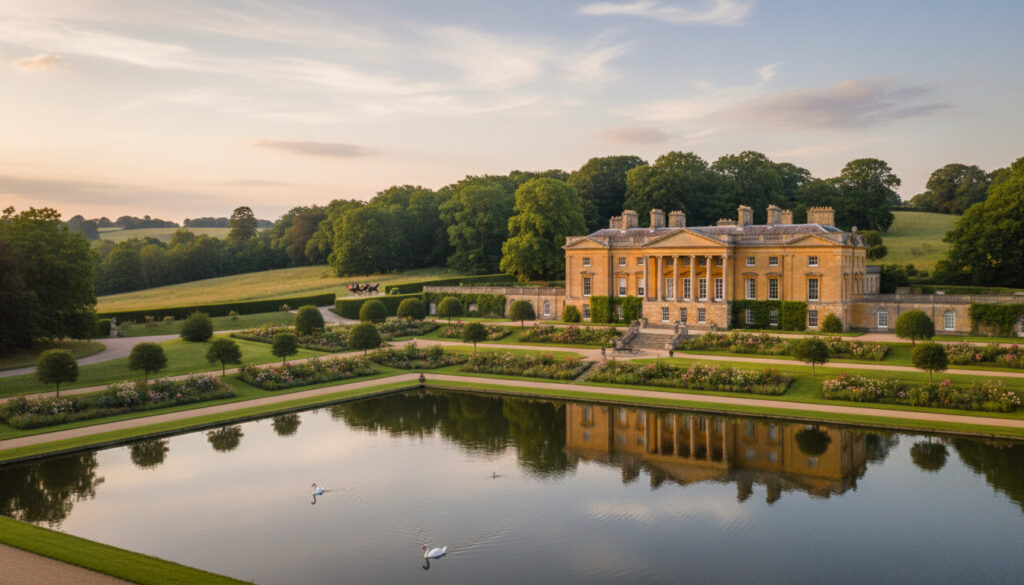
Pride and Prejudice (1995 TV Series) – Cast, Episodes, Where to Watch
The 1995 BBC adaptation of Jane Austen’s Pride and Prejudice remains the definitive television interpretation of the classic novel. Starring Jennifer Ehle and Colin Firth, the six-part miniseries transformed period drama conventions and established new standards for literary adaptation through its extended runtime and faithful screenplay.
Produced by Sue Birtwistle and directed by Simon Langton, the series first captivated British audiences on BBC1 in autumn 1995 before crossing the Atlantic to A&E. Its influence extends far beyond its initial broadcast, inspiring subsequent adaptations and cementing certain performances in cultural memory.
Nearly three decades later, the production continues to attract viewers seeking both fidelity to Austen’s text and the particular chemistry of its lead actors. Understanding its production history, cast composition, and broadcast legacy requires examining verified records from BBC archives and studio documentation.
Where to Watch Pride and Prejudice (1995) Miniseries
- The six-episode structure allows comprehensive coverage of the novel’s plot and subplots
- Total runtime of approximately 330 minutes provides space for character development
- Colin Firth’s portrayal established the modern archetype for Mr. Darcy
- Jennifer Ehle received the BAFTA Television Award for Best Actress
- The production won an Emmy for Outstanding Individual Achievement in Costume Design
- The “wet-shirt” scene ranks among the most unforgettable moments in British television history
- The adaptation directly inspired Helen Fielding’s Bridget Jones novels
| Fact | Details |
|---|---|
| Network | BBC |
| Based On | Jane Austen’s 1813 novel |
| Director | Simon Langton |
| Producer | Sue Birtwistle |
| Screenwriter | Andrew Davies |
| Total Runtime | ~330 minutes |
| UK Premiere | September 24, 1995 |
| US Premiere | January 14, 1996 (A&E) |
Cast and Main Characters in Pride and Prejudice 1995
Jennifer Ehle and Colin Firth anchor the production as Elizabeth Bennet and Fitzwilliam Darcy. Ehle’s performance earned the BAFTA for Best Actress, while Firth’s interpretation became a cultural touchstone that influenced subsequent portrayals of the character.
The Bennet Family and Suitors
Alison Steadman and Benjamin Whitrow portray the contrasting parental figures of Mrs. and Mr. Bennet. Susannah Harker appears as the eldest daughter Jane, while Crispin Bonham-Carter plays the amiable Mr. Bingley. The younger sisters—Mary, Kitty, and Lydia—are played by Lucy Briers, Polly Maberly, and Julia Sawalha respectively.
Unlike modern ensemble casts such as the Cast of Queen Charlotte: A Bridgerton Story, this production relied on a tighter principal cast supported by established British character actors.
Colin Firth’s portrayal cast a “very long shadow” over subsequent interpretations of Mr. Darcy, directly influencing casting decisions in later adaptations including the character’s namesake in Helen Fielding’s Bridget Jones series, which Firth later played in the film adaptations.
Plot Summary and Episode Guide
The narrative follows the Bennet family’s five daughters navigating marriage prospects in Regency-era England. The arrival of wealthy bachelor Charles Bingley and his friend Fitzwilliam Darcy disrupts the local social order, initiating a complex courtship between Darcy and the sharp-witted Elizabeth Bennet.
Major Story Arcs
Key story beats include Darcy’s initial interference in Bingley’s courtship of Jane Bennet, Elizabeth’s visit to the Collins estate near Lady Catherine de Bourgh’s property, and Darcy’s failed first proposal. The narrative escalates with George Wickham’s deception and Lydia Bennet’s elopement, requiring Darcy’s secret intervention to resolve the family scandal.
The six episodes follow the novel’s chronological structure sequentially, with each installment running approximately 55 minutes. This format allowed screenwriter Andrew Davies to expand internal monologues through dialogue and visual storytelling not possible in the original text.
Reception, Awards, and Differences from the Book
Critical Recognition
The series achieved both popular acclaim and commercial viability upon release. Britannica notes the production’s role in launching Firth to international stardom alongside his subsequent work in films such as The English Patient.
Awards and Honors
In addition to Ehle’s BAFTA win, the production earned an Emmy for Outstanding Individual Achievement in Costume Design. Rotten Tomatoes lists the complete cast and crew credentials, though aggregate critical scores remain unavailable in current documentation.
Adaptation Fidelity
Andrew Davies’ script is widely regarded as highly faithful to the source material, preserving the novel’s satire and character arcs. The famous wet-shirt scene, while not present in the book, was drawn from hints within Austen’s text regarding Darcy’s private nature. Some critics have contrasted this adaptation’s traditional approach with the more revisionist 2005 film version.
Current streaming availability on platforms such as BritBox, Netflix, or other services remains unconfirmed in available documentation as of pre-2026 records. Viewers should verify current licensing agreements directly with streaming providers, as regional availability changes frequently.
Production and Broadcast Timeline
- : Production begins under BBC with A&E funding
- : UK premiere on BBC1
- : Final episode airs in UK
- : US premiere on A&E in double-episode format
- : BAFTA Television Awards recognition for Jennifer Ehle
- : Retrospective documentation of cast appearances then and now
What Is Definitively Known and What Remains Uncertain
Established Facts
- Six episodes of 55 minutes each
- BBC and A&E co-production
- September 24, 1995 UK premiere date
- BAFTA win for Ehle; Emmy for costume design
- Screenplay by Andrew Davies
Information Requiring Verification
- Current streaming platform availability varies by region
- Specific IMDb aggregate ratings (unavailable in sources)
- High-definition remaster dates and technical specifications
The Adaptation in Historical Context
The 1995 miniseries arrived during a resurgence of interest in period drama, positioning itself between the 1980s heritage film boom and later waves of revisionist historical fiction. Its success demonstrated the viability of extended television formats for classic literature, allowing for narrative depth that theatrical releases often sacrifice.
The production’s influence extends to contemporary Regency romance, though modern interpretations like the Cast of Queen Charlotte: A Bridgerton Story employ more diverse casting and anachronistic elements compared to this adaptation’s traditional approach. Similarly, cultural artifacts from the 1990s such as the Home Alone Lego House demonstrate the era’s lasting impact on popular culture, though in entirely different genres.
Sources and Documentation
Primary documentation for this production includes BBC broadcast records, BAFTA archives, and the Jane Austen Fandom wiki, which maintains detailed cast records and episode information. IMDb provides technical credits and database indexing.
The wet-shirt scene ranks among the most unforgettable moments in British TV history.
— Television historians and critics, via Jane Austen Wiki
Summary
The 1995 Pride and Prejudice miniseries represents a landmark in literary adaptation, combining faithful interpretation with memorable performances. Its six-episode structure, award-winning production values, and lasting cultural impact—from BAFTA recognition to influencing modern romance narratives—secure its position as a definitive version of Austen’s work. While current streaming availability requires direct verification with providers, the series remains accessible through various legitimate channels and continues to attract new generations of viewers.
Frequently Asked Questions
Is Pride and Prejudice 1995 available on Netflix?
Sources do not confirm current Netflix availability as of pre-2026 documentation. Streaming rights vary by region and change frequently. Check the platform directly for current licensing status.
Who played Mr. Darcy in the 1995 adaptation?
Colin Firth portrayed Fitzwilliam Darcy. The role propelled him to international stardom and established a template for subsequent interpretations of the character.
How many episodes are in the 1995 miniseries?
The series comprises six episodes, each running approximately 55 minutes for a total runtime of about 330 minutes.
What is the runtime of each episode?
Each episode runs approximately 55 minutes. The series originally aired on BBC1 in this format, while A&E broadcast double episodes in the US market.
How faithful is the 1995 adaptation to Jane Austen’s novel?
Andrew Davies’ screenplay is widely regarded as highly faithful, preserving the novel’s satire and plot structure. The famous wet-shirt scene, while not in the book, derives from hints in the text about Darcy’s private nature.
Did Pride and Prejudice 1995 win any major awards?
Yes. Jennifer Ehle won the BAFTA Television Award for Best Actress, and the production received an Emmy for Outstanding Individual Achievement in Costume Design.
What year did the series first air?
The miniseries premiered on BBC1 on September 24, 1995, concluding on October 29, 1995. It debuted in the United States on A&E on January 14, 1996.
More related posts
 100 Pounds in Euros – Best Rates from Supermarkets and Post Office
 Grand Theft Auto VI (GTA 6): Official Release and Rumor Check
 Billie Eilish: Gender Identity, Relationships, and Personal Life
 Rio Ngumoha: Bio, Stats, Transfer Fee and Family
 Kevin Keegan: Cancer Diagnosis, Career & Life Today
 Danny Dyer: Net Worth, Wife, Movies, and Life in 2024
 Ramsay Bolton: Cruelty, Death, and Joffrey Comparison
 Newspaper – Definition, History, Types and Challenges