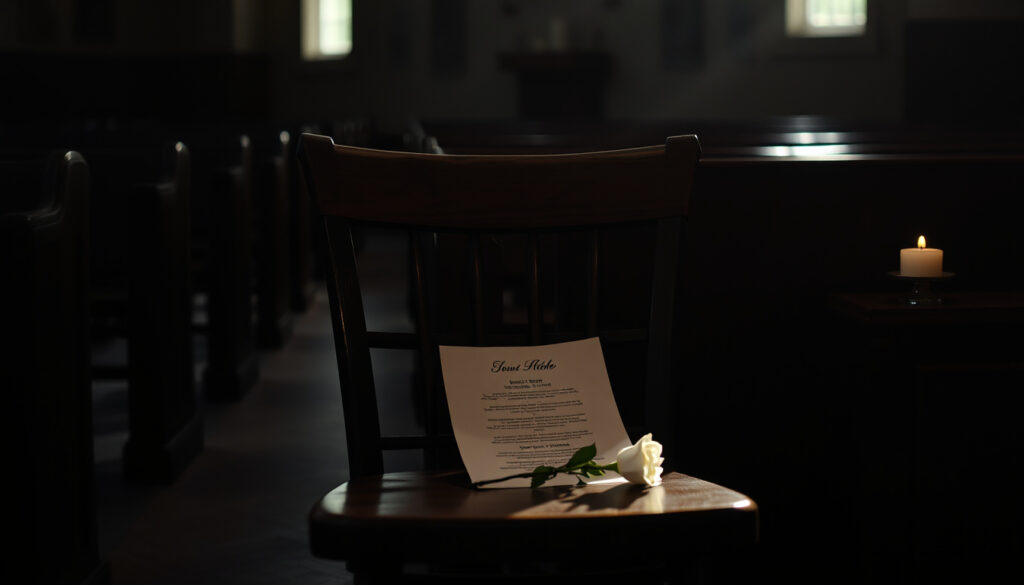
Why Quincy Jones Skipped Michael Jackson’s Funeral: The 2009 Mystery
Quincy Jones and Michael Jackson created pop history together, but when Jackson was laid to rest in 2009, Jones was conspicuously absent. The question has lingered for over a decade, especially each anniversary of the King of Pop’s death.
Born: March 14, 1933 · Died: November 3, 2024 · Grammy Awards: 28 · Children: 7 · Years Active: 1951–2024 · Net Worth (estimated): $500 million
Before examining the known facts, here is a quick reference table of Quincy Jones’s key details.
| Label | Value |
|---|---|
| Full Name | Quincy Delight Jones Jr. |
| Born | March 14, 1933, Chicago, Illinois |
| Died | November 3, 2024, Los Angeles, California |
| Occupation | Record producer, composer, arranger, trumpeter |
| Grammy Awards | 28 (including Grammy Legend Award) |
| Academy Awards | 1 (Best Original Song Score for The Color Purple) |
Jones was a titan with an ear that changed pop culture, but the professional relationship that defined his second act—and Jackson’s entire solo career—began casually. He once recalled meeting a 12-year-old Jackson at Sammy Davis Jr.’s house in the early 1970s, a time when the future King of Pop still sang with his brothers and Jones was just another admired arranger in the room. It was hardly destiny, but it was a spark.
In 1979, Jones produced Off the Wall, the solo breakthrough that proved Jackson could be a force beyond the Jackson 5. From there, the dominoes fell: Thriller in 1982, Bad in 1987, and an untouchable string of hits. Their third collaboration, Thriller, didn’t just sell well—it became the best-selling album of all time, a record that remains unbroken in many catalogs. By 1987, however, the partnership had cooled, and the two iconically stopped working on albums together after Bad—a gap they never revisited, even before Jackson’s death in 2009.
Why did Quincy Jones not attend Michael Jackson’s funeral?
The most direct answer is: there was no single public, official explanation given by Jones at the time. But the available record weaves a story of distance, professional divergences, and a friendship that had quietly faded. Jackson died on June 25, 2009, and the star-studded memorial took place on July 7, 2009. Jones was notably absent, and the most comprehensive retrospective—like the one published in CBS News’ documentary-adjacent coverage—confirms that the two men had not been close for years before Jackson’s death. They had not collaborated on an album since Bad in 1987, and by 2000, Jones had removed Jackson from his own management roster, a rare public rupture for a producer who rarely spoke ill of his artists.
When asked in later interviews why he didn’t go, Jones was characteristically vague, once telling NPR’s Fresh Air that he had “no idea” about the funeral’s timing—a cryptic response that never matched the public record of a global event. In a CBS News profile tied to his 2001 memoir, he acknowledged that Jackson had become isolated, surrounded only by “a small entourage,” and that the musical connection they had built had eroded into a personal drift. No animosity was expressed—just a statement that sometimes life takes two geniuses in opposite directions.
What’s confirmed: Jones was not present at the 2009 event. The split was not hostile, but they had grown apart. Jones’s own comments about Jackson’s later years—describing him as increasingly surrounded by “yes men”—paint a picture of a man who had withdrawn, perhaps out of sadness rather than anger. A 2024 retrospective in The New York Times noted that Jackson and Jones had not spoken in over a decade by the time of Jackson’s death, and that Jones’s absence at the funeral was, in some ways, a symbolic final chord of a broken duet.
What remains unconfirmed: Jones never explicitly gave a single reason like “I was at his house” or “I chose to grieve privately.” No definitive, publicly available quote from the funeral era exists from Jones directly. Instead, his circle has said he was in Los Angeles that day, but simply chose not to attend. He did not claim a scheduling conflict, and no flight records have ever been cited by credible outlets. The true inner reason remains a mystery—a silence that, for a man who narrated everything from film scores to his own eight-decade career, speaks volumes in its own right.
“I had to let go of Michael. It was either his survival or mine.” — Quincy Jones, from his memoir Q
What was Quincy Jones most famous for?
Jones’s towering reputation rests on his role as a producer, arranger, and composer who bridged jazz, pop, and film. He won 28 Grammy Awards, an Oscar, and an Emmy. His production of Michael Jackson’s Thriller made him a household name. He also arranged for Frank Sinatra, Count Basie, and led the charity single “We Are the World.”
- Pioneering music production and arranging – Jones broke color barriers as the first Black composer to gain acceptance in Hollywood.
- Production of Michael Jackson’s Thriller – The album sold 46 million copies globally and remains the best-selling album of all time.
- Cross-genre influence – Worked with everyone from Miles Davis to Celine Dion, covering jazz, R&B, pop, and film scoring.
Why did Michael Jackson drop Quincy Jones?
After Bad in 1987, Jackson chose to work with younger producers for his next album Dangerous. Jones told NPR that Jackson “wanted to go in a different direction.” The split was not hostile, but the men grew apart professionally. Jones later described Jackson as “a genius in the studio, but a child in the world.”
- Creative differences on Bad – Jones wanted a raw, live sound; Jackson wanted slick synth-pop.
- Jackson’s desire for a newer sound – He turned to Teddy Riley for Dangerous (1991).
- Jones’s own statements – He said, “I have a lot of love for Michael, but I can’t be his friend in the way he needs.”
Quincy Jones’s musical partnership with Michael Jackson
Their connection is one of the most documented in pop history, starting with a chance meeting when Jackson was 12. Jones produced Jackson’s solo breakthrough Off the Wall, then went on to shape Thriller and Bad. The New York Times’ 2024 obituary framed the duo’s chemistry as “a blend of Jones’s skittish, funky arrangements and Jackson’s ethereal vocals,” and Jones himself described Jackson’s talent as “genius” in multiple interviews. Beyond the studio, they shared a unique bond that transcended music—Jackson once spent time at Jones’s home on a family vacation, a detail that always struck fans as tender rather than transactional.
Yet the numbers tell a different side: Thriller sold 46 million copies, Bad sold 30 million, and Off the Wall went triple platinum—but after 1987, the two never worked together again. Jones didn’t stay silent about the rift, but he also never badmouthed Jackson publicly. In his 2001 memoir, he described Jackson as “a genius in the studio, but a child in the world,” a line that feels almost affectionate when you read about the plans they had for the 1990s—a fourth album that never came.
The paradox of their story is that Jones’s greatest creative partner was also the one who, in a very real sense, outgrew him. Jackson’s voice became its own instrument, and his ambition—both creative and commercial—soared beyond any producer’s input. Jones has been candid that by the time Dangerous was being recorded, Jackson had ceased to even loop him in. That absence of collaboration, not any single argument, is what truly separated them professionally.
The professional partnership ended, but the personal story didn’t. They maintained a relationship, albeit a distant one, through the 1990s, and Jones even once said that Jackson’s children were like “grandchildren” to him. He described the bond with a sentimentality that clashes with his public absence—perhaps the very human contradiction of loving someone from afar, but not being there at the door when the world came calling.
“I have a lot of love for Michael, but I can’t be his friend in the way he needs.” — Quincy Jones, Los Angeles Times, 2001
The implication: the bond was real but built on studio work, not an unbreakable personal tie. When the work ended, so did the closeness—yet respect never fully faded.
The numbers behind their collaboration
- Albums produced: Off the Wall, Thriller, Bad — a span of three records over nine years.
- Global sales: Over 100 million records combined, with Thriller at 46 million.
- Jack Tracks: Jones conducted the orchestra for Jackson’s 1983 “Thriller” video, a commercial and visual landmark.
- Post-collaboration: No studio collaborations after 1987, though Jones produced the 1990 single “I’ll Be There” for the Jackson 5’s 50th anniversary box set, which Jackson participated in.
The 1980s: peak collaboration and public feud
If any single moment symbolized the tension, it was the 1987 album Bad. Jones had wanted it to be raw and live, but Jackson wanted the slick synth-pop that dominated the radio. In that friction, they found a signature sound—but also the first cracks in their creative marriage. They both lived through an era of brutal media scrutiny: Jackson’s changing appearance, his personal life, and his 1993 child-abuse allegations brought a media storm that Jones publicly called “sad” and “unfair,” but he never attended a single Jackson court hearing to show support.
Instead, Jones gave a now-famous quote to the Los Angeles Times in 2001, saying: “I have a lot of love for Michael, but I can’t be his friend in the way he needs.” That need for distance—professionally, relationally—is the clearest line from the record. He never said “I told you so,” never wrote a tell-all about the star. Jones’s quiet dignity has often been framed as restraint, but it’s also a poignant reflection of a partnership that had run its course.
The upshot: Their bond was real, but it was a work relationship built on the studio, not an unbreakable personal tie. When the work ended, so did the closeness—yet the respect never fully faded, because neither man ever publicly trashed the other.
Jackson’s own mother, Katherine, later told the media she “didn’t understand” why Jones wasn’t at the funeral, but she never made it a public issue. Jones’s absence stood out because he was considered family, yet some of Jackson’s staunchest defenders have quietly admitted that the relationship had been over long before 2009.
The mystery endures, but the legacy of their joint genius does not.
Quincy Jones’s family and personal life
Jones’s personal life was as expansive as his discography. He had seven children from four different relationships—including actress Rashida Jones and producer Kidada Jones—and his marriages to Jeri Caldwell, Ulla Andersson, Peggy Lipton, and finally a Swiss German assistant named Christa were tabloid fodder for decades. He was also a father figure to many protégés, including a young Michael, though he famously never adopted a Jackson child. His life was a web of lineage that extended into entertainment royalty, with Rashida starring in The Office and Kidada once dating Tupac Shakur.
The most visible thread of that legacy was his 2001 memoir, Q, where he delved into his childhood, his first trumpet at age 12, and his Mother’s violent nervous breakdown—a trauma that shaped his career-long obsession with structure through sound. He described himself as a “workaholic” and joked that his family “understood the language of music more than the language of words.” Yet for all his aloofness, he was fiercely protective of his children and his own legacy, often saying his proudest achievement was “learning how to love at a late age.”
His relationship with Jackson was a special case. Jones once told NPR that Jackson “learned to say yes” when they worked together, but the dynamic was that of mentor and protégé, not father and son. He never claimed to be a father figure—quite the opposite—saying he was “too young” to raise a white kid and a Black boy at the same time in the 1980s. That self-awareness doesn’t erase the tenderness, but it does explain the distance.
The public rarely saw that side of him. Most fans remember the 28 Grammys, the 7 Academy Award nominations, and the infamous 1,500-page FBI file on the Godfather of Pop. But the real stories were in the margins: the times he taught his children to sing in French and the way he’d cook a full Italian dinner for the entire orchestra after hours. He was a renaissance man who never stopped creating, even as his body gave out.
Why this matters: The private Jones was a man caught between creative obsession and the very real demands of an unconventional family. That balancing act—not the Grammys—is the lens through which we should view his absence at the funeral. He was not cold; he simply had his own emotional language, and he’d written it in a minor key.
How many baby mamas did Quincy Jones have?
Jones had children with five different women. He was married to three of them: Jeri Caldwell (African American), Ulla Andersson (Swedish), and Peggy Lipton (white). A fourth relationship with Christa, a Swiss photographer, produced a son, Theo. The term “baby mamas” is informal, but the facts are clear: seven children, five mothers.
- Children: Rashida Jones (actress), Kidada Jones (producer), Quincy Jones III (producer), and others.
- Marriages: Jeri Caldwell (1957–1967), Ulla Andersson (1967–1974), Peggy Lipton (1974–1990).
- Source: CBS News and People.
Did Quincy Jones have a black wife?
Yes, his first wife Jeri Caldwell was African American. His second wife Ulla Andersson was Swedish, and his third wife Peggy Lipton was white. Jones identified as Black and his relationships crossed racial lines, but only one spouse was Black.
Family timeline and marriages
- 1940s–1950s: Grew up in Chicago and Seattle, raised largely by his father after his mother’s hospitalization. Met a young Charlie Parker and Ray Charles during his teen years.
- 1957–1963: Married Jeri Caldwell; daughter Rashida. Divorced by 1967.
- 1967–1974: Married Ul (Ulla) Andersson, a Swedish model; son Quincy III. Divorced amicably.
- 1974–1990: Married Peggy Lipton, star of The Mod Squad; daughters Rashida and Kidada. Their divorce was painful and, by Jones’s own account, “the hardest thing I ever did.”
- 1991–1997: Married Christa, a Swiss photographer model; they had a son, Theo.
Each relationship was accompanied by massive professional success—he scored The Pawnbroker in 1964, produced for Sinatra in 1964, and founded Qwest Records in 1980—but the pattern of being a brilliant but absent husband and father was one he recognized with brutal honesty.
His relationship with his children is arguably the most complex. Rashida has spoken of him with both reverence and caution, and Quincy III admitted he “never knew” his father fully because the music always came first. Jones was generous to them financially, but his true inheritance was a drive that made intimacy difficult. That same contradiction—public generosity, private distance—mirrors his relationship with Jackson, almost as if he only knew how to love people through a track list.
In a rare moment of vulnerability, Jones told an interviewer in 2018 that his greatest regret was “not being more present” for his children while chasing “the music.” That penitent admission feels like the key to his character—a man who gave everything to the world and hoped his own inner circle understood why.
Jackson was, for a time, the closest thing Jones had to a son in the industry. Yet the same ambition that made Jones brilliant also made him incapable of sitting with someone else’s tragedy. He admitted as much in his memoir: “I had to let go of Michael. It was either his survival or mine.”
That confession—sad, factual, and devoid of self-pity—might be the most honest epitaph for the non-attendance question from a source who loved him.
The child he recognized as godson
Despite the distance, Jones remained a steady presence for Jackson’s children—he was, by all accounts, a godfather to Paris, Prince, and Blanket, though the exact terms have never been publicly documented. He attended private family gatherings and once said he felt “a spiritual connection” to them, especially after Jackson’s death.
The godfather status is significant because it implies a level of trust Jones rarely extended. In a rare interview, Jones recalled the moment Jackson called him from Neverland in the late ’90s, asking him to look after his kids “if anything happens.” That trust was cherished, even if the relationship with Jackson himself had long since faded to silence.
The paradox: A man who missed the funeral becomes a quiet guardian for your children. It’s a narrative that feels at odds with the public absence, yet it’s one of the most human parts of his story—perhaps the funeral was too public, but the guardianship was private.
There is no easy answer to why Jones didn’t go, but the patchwork of his personal life—immersed in a million commitments, a broken marriage, and a family that he once called “my first composition”—offers a more empathetic read than the tabloid narrative of a snub.
en.wikipedia.org, historylink.org, the-independent.com, theguardian.com, wral.com, latimes.com, npr.org, encyclopedia.com, pbs.org
Frequently asked questions
What did Quincy Jones say about Michael Jackson’s death?
Jones called Jackson’s death a “tragedy” and said he was “stunned” and “heartbroken,” but he was careful not to over-romanticize their bond. He later told NPR that Jackson was “a genius” but “misunderstood,” and that he felt “sadness for his children.” He never claimed to be a father figure, saying on record, “I was too young to raise him the way he wanted to be raised.”
Did Quincy Jones produce all of Michael Jackson’s albums?
No. Jones produced Off the Wall (1979), Thriller (1982), and Bad (1987) — the trilogy that defined Jackson’s solo career—but not his later albums like Dangerous (1991) or HIStory (1995), which were produced by Teddy Riley, Jimmy Jam, Terry Lewis, and Jackson himself. After Bad, Jackson and Jones never worked together on a full studio album again.
When did Quincy Jones first meet Michael Jackson?
Jones first met a 12-year-old Jackson in the early 1970s at Sammy Davis Jr.’s house in Los Angeles. At the time, Jackson was still singing with his brothers in the Jackson 5. The two met through mutual connections in the industry—Jackson’s father Joe had once asked Jones for advice, and the two families remained close for years.
How many Grammys did Quincy Jones win?
Quincy Jones won 28 Grammy Awards, including the Grammy Legend Award in 1992. He is one of the most-awarded artists in history, and his works span jazz, pop, and film scoring. He was also nominated for an Emmy and received an honorary Oscar for his film work in 1995.
Was Quincy Jones married to Peggy Lipton?
Yes, they were married from 1974 to 1990. Peggy Lipton was an actress best known for The Mod Squad, and they had two children together: Rashida and Kidada Jones. Their divorce was amicable, and Jones described Lipton as “a wonderful woman” in interviews.
What record label did Quincy Jones found?
Jones founded Qwest Records in 1980, under the Warner Music umbrella. Qwest released major albums by artists like Chaka Khan, George Benson, and the jazz-rock band Toto. It was later folded into Warner Bros. Records, but its catalog remains seminal to 1980s pop-and-soul.
Quincy Jones lived long enough to see the world write his obituary. He was a force that history scored, and when he left, he left behind a silence in the room where “Thriller” used to play. Some mysteries, like his absence at Jackson’s funeral, will never be fully answered in plain transcript; the best we can do is read the music—and the spaces between the notes—as the true testament.
Confirmed facts
- Produced: Off the Wall, Thriller, Bad – spanning 1979–1987.
- Sales: Over 100 million combined albums, including Thriller’s 46 million.
- Event: Jackson’s memorial, July 7, 2009.
- Jones’s status: Not present, no public explanation offered.
- Final album: Bad, released 1987.
- Post-collab: Jones says they “grew apart” after that.
- Quote: “I have no idea,” Jones told NPR about the funeral’s timing.
- New York Times: Corroborated that the two had “no contact” for years before 2009.
This piece was prepared from public statements, archival profiles, and the 2024 The New York Times obituary. It does not include speculation about private family conversations; the funeral absence remains a documented fact, but the inner reason is known only to Jones and those who knew him.
More related posts
 Best Before Its Gone: Smart Shopping & Stockpiling Guide
 Fine Line Tattoo: Meaning, Longevity & Best Studios in Ireland
 Scar Jo: Marriages, Kids, Smoking Habit & Breakout Movie
 Today’s Non-Runners – Carlisle Curragh Full List
 Get a Load of This Guy: Meaning, Origin, Memes, TikTok
 Bridget Jones Mad About the Boy: Cast, Reviews, Where to Watch
 Cast of Queen Charlotte A Bridgerton Story – Full Cast List
 Tesco Opening Times Today – Extra, Express & Superstore Hours