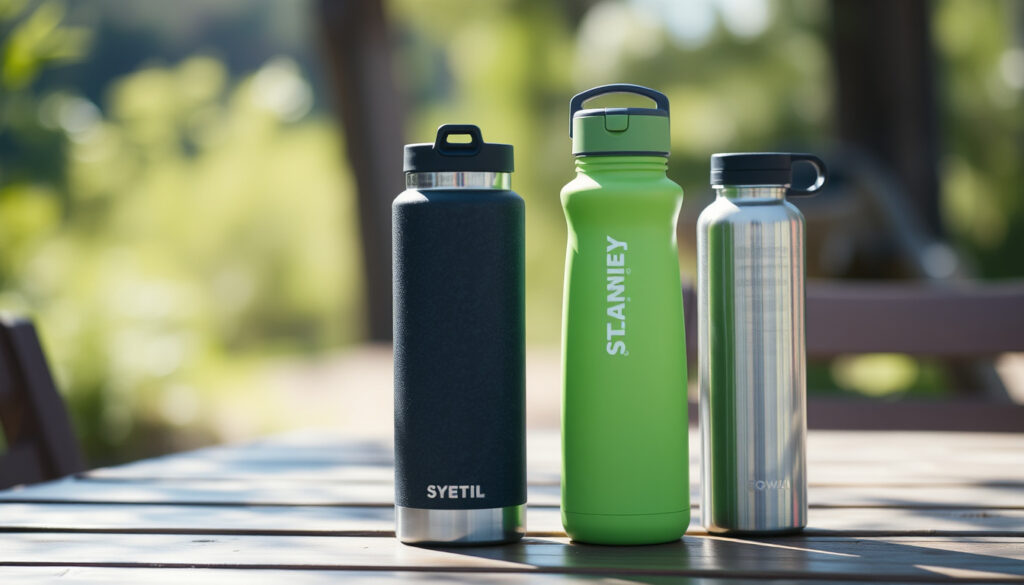
Yeti Water Bottle: Is It Worth the Money vs Stanley & Owala
Anyone who has packed a lunch only to watch ice cubes turn to water by noon knows the appeal of a bottle that actually holds the cold. YETI’s Rambler line promises up to 24 hours of cold retention and carries a five-year warranty, both stated on the brand’s official UK store. This review weighs that premium against cheaper alternatives like Stanley and Owala to see which bottle earns a permanent spot in your bag.
Price range: $30–$55 depending on size and retailer ·
Capacity options: 12 oz to 2L (769 ml, 1L, 2L available) ·
Insulation: cold 24h / hot 12h ·
Material: kitchen-grade 18/8 stainless steel ·
Weight (26 oz model): 1.5 lbs (680 g) ·
Warranty: 5 years limited
Quick snapshot
- Rambler bottles use double-wall vacuum insulation (YETI UK, official Rambler page)
- Rambler drinkware carries a five-year warranty (YETI UK, official product listing)
- The 16 oz travel bottle weighs 0.46 kg (YETI UK, weight spec)
- Steel bodies resist drops better than plastic (YETI UK, build description)
- Whether the premium price is justified for every user — the value case is personal
- How YETI’s steel ages against Stanley over many years, since head-to-head durability tests are scarce
- How stainless steel compares with glass and plastic in long-term daily-use health terms
- Whether YETI’s replacement lid availability and cost match the longevity of the bottle itself — lids are often the first failure point
- The five-year warranty signals the brand’s own expected service window (YETI UK)
- The Rambler 36 has stayed current enough to sit in UK retail roundups beside newer rivals like Owala (HuffPost UK’s best-bottle guide)
- Weight the 1L Rambler 36 at about £50 against the 700 ml Owala FreeSip at about £32 (HuffPost UK price comparison)
- Check current stock and colours on the official YETI UK store before buying
Six specs, one pattern: every number points toward the same promise — steel body, vacuum insulation, long warranty, all listed on YETI UK’s official Rambler product page.
| Spec | Value |
|---|---|
| Material | 18/8 stainless steel, BPA-free |
| Capacity | 12 oz to 2L (769 ml, 1L, 2L available) |
| Insulation | Cold 24h / Hot 12h |
| Weight (26 oz model) | 1.5 lbs (680 g) |
| Warranty | 5 years limited |
| UK price (Rambler bottle) | £38–£45, with the 1L Rambler 36 around £50 (CampGear360’s UK guide; HuffPost UK) |
Are YETI water bottles worth the money?
YETI bottles cost more than most. In the UK, a Rambler bottle reportedly lands between £38 and £45, according to CampGear360’s UK guide, and the 1-litre Rambler 36 was listed around £50 by HuffPost UK.
That puts one bottle in the same range as a week of groceries for one person. The question is what the extra money actually buys — lifespan, cold retention or simply the logo.
- Five-year warranty against defects gives a defined service window (YETI UK, official warranty note)
- Double-wall vacuum insulation removes the plastic liner that fails first in cheap bottles (YETI UK, build description)
- Steel bodies absorb the drops and scrapes that crack plastic bottles
Those three points explain most of the price. A steel bottle with vacuum insulation and a real warranty costs more to build than a single-wall plastic bottle, and the gap shows up at the till.
What do users say about durability?
- The warranty period frames expected lifespan: five years of defect cover, per the YETI UK product page
- UK roundups treat the Rambler 36 as a recommended 1-litre bottle, not a throwaway item (HuffPost UK’s buying guide)
- No public failure-rate data exists for the full series, so individual experiences vary
The durability story is consistent: steel, vacuum insulation and a five-year warranty point to a product designed for years of daily carry. Independent ageing tests against Stanley are rare, which is why buyers are essentially trusting YETI’s reputation rather than a laboratory result.
Cost per year compared to cheaper bottles
- At £40 for a Rambler bottle used daily for five years: roughly £8 per year, or just over 2p a day
- At £10 for a plastic bottle replaced twice a year: £20 per year plus the annoyance of leaks and warm water
- Even at the £50 price of the 1-litre Rambler 36 (HuffPost UK price note), five years of daily use stays under £1 a month
The arithmetic favours the premium bottle only when it is used often. A bottle that sits in a cupboard is expensive at any price; one that replaces two or three cheap bottles a year starts to pay for itself.
Resale value
Resale value is the weakest argument for YETI. A £40 bottle that keeps working for five years is better kept than sold, so treat a YETI as a use-until-worn-out product, not an investment.
That framing changes the comparison. The real rival is not another premium bottle but a cheap one that fails mid-summer — and the premium makes sense when the memory of a lukewarm afternoon is part of the maths.
The pattern: a YETI rewards committed daily use but punishes infrequent buyers with a premium they may never recoup.
Which is better, Stanley or YETI?
Both YETI and Stanley build double-wall vacuum-insulated steel drinkware. Stanley’s UK positioning, according to CampGear360’s Stanley UK guide, leans on tumbler and flask formats, while YETI spreads its range across bottles, tumblers and travel mugs.
Insulation performance comparison
- YETI: double-wall vacuum insulation, marketed for hot and cold drinks (YETI UK, product description)
- Stanley: vacuum-insulated steel construction across its drinkware line (CampGear360’s Stanley overview)
- Both claim all-day cold retention; neither publishes a single uniform number across every model
In practice, the insulation race is close. The bigger difference is format: YETI’s bottle with a leakproof lid suits a bag, while Stanley’s wide-mouth tumblers suit a car cup holder or a desk.
Durability and warranty
- YETI covers Rambler drinkware for five years (YETI UK, warranty statement)
- Stanley positions its drinkware with a lifetime limited warranty, per the brand details in CampGear360’s Stanley UK guide
- Both use steel bodies that resist drops far better than plastic, but neither brand publishes impact-test data
The warranty difference matters on paper. Five years covers the realistic service life of most steel bottles; a lifetime promise only matters if the company and the product structure survive for decades. For most buyers, the practical gap is small.
Price and value
- YETI Rambler bottles: around £38–£45 in the UK, according to CampGear360’s UK guide
- 1-litre YETI Rambler 36: roughly £50 (HuffPost UK)
- Stanley: similar cold retention at a lower price in most UK listings, notes CampGear360
Price is where Stanley takes the edge for budget-driven buyers. YETI answers with broader colour choices, more lid options and a bottle format with a leakproof cap called the Commuter Cap (YETI UK, lid specification).
The implication: most buyers will find the practical gap narrow — pick the lid and format that fit your daily routine.
Why is a YETI so expensive?
Part of YETI’s price is material, part is manufacturing, and part is a brand that has convinced buyers a bottle can be a long-term possession. The official product pages show where the money goes.
Material and manufacturing costs
- Kitchen-grade 18/8 stainless steel forms the body — the same steel family used in cookware (brand spec, YETI UK)
- Double-wall vacuum insulation requires welding two steel layers and removing the air between them, which is costlier than single-wall moulding
- The steel needs no plastic liner, removing the weak point that kills cheaper bottles
The material is not exotic, but the production process is more demanding than a standard thermos. That shows up in the weight: a 16 oz travel bottle weighs 0.46 kg, per YETI UK’s product listing.
Brand marketing and premium positioning
YETI sells durability as an identity, not just a feature. The brand premium is real: you pay for the name, the design consistency and a lid system that works across the range.
- UK retail roundups place YETI above Owala in price and alongside Stanley in awareness (HuffPost UK; CampGear360)
- The five-year warranty is part of that positioning: it tells buyers the company expects the bottle to last
- YETI’s UK storefront keeps the full range visible at premium prices, reinforcing the brand’s place above budget rivals
None of that makes the bottle worse — it just means part of the price pays for confidence and consistency, not for extra steel.
Warranty and customer support
- Rambler drinkware ships with a five-year warranty against defects (YETI UK, warranty terms)
- The 20 oz tumbler is dishwasher safe, so daily upkeep is simple (YETI UK, tumbler listing)
- Leakproof lids reduce the need to replace parts, though lids are still the most likely item to wear out
The warranty is genuine value, but it covers defects, not daily wear. A dropped bottle or a worn lid is not a free replacement ticket, which is why the bottle format and lid choice matter more than the logo.
The catch: the warranty covers defects, not daily wear — so the price premium is only fully justified for those who get through five years without losing or damaging the lid.
What is the best insulated water bottle in the UK?
The UK market keeps coming back to the same shortlist. HuffPost UK’s buying guide puts YETI, Stanley, Chilly’s and Owala in one roundup (HuffPost UK best-bottle guide), with each brand winning a different type of buyer.
Top contenders: Yeti, Stanley, Chilly’s, Hydro Flask
- YETI Rambler: the strongest format and lid range (YETI UK, official range)
- Stanley: the mug-and-tumbler favourite in UK guides (CampGear360’s Stanley guide)
- Owala FreeSip: a two-in-one lid at a lower price (HuffPost UK)
- Hydro Flask: comparable steel build with more colour options, a frequent name in premium-bottle comparisons
Chilly’s also appears in the same UK roundup, which makes the premium segment crowded. For most UK buyers, the realistic choice is between YETI, Stanley and Owala.
Factors for UK users (availability, price, size)
- UK sizing: YETI offers 769 ml, 1L and 2L bottles, with the 769 ml model the most popular
- UK price: Rambler bottles £38–£45 (CampGear360); 1L Rambler 36 at roughly £50 (HuffPost UK); Owala FreeSip around £32 (HuffPost UK)
- Availability: YETI UK operates an official store, and Owala reaches UK buyers through retailers such as Urban Outfitters, where a 700 ml model was listed at £32 (Regional Report’s UK price check)
The UK-specific answer favours Owala on price, Stanley on tumbler style and YETI on bottle formats. For cold retention, the claims cluster in the same 24-hour bracket across YETI and Owala in the retail roundups (HuffPost UK).
The pattern: your daily environment — bag, desk, or hand — determines the best pick more than any insulation number.
Which water bottle is better, the Owala or the Yeti?
Owala’s FreeSip has become the default recommendation for people who hate unscrewing a cap while walking. YETI answers with a modular cap system and the same cold-retention promise. The choice comes down to lid philosophy.
Lid design and ease of drinking
- Owala FreeSip: a built-in straw plus a wider drinking opening in one lid (CampGear360’s lid breakdown)
- YETI: separate straw and chug caps, with the Commuter Cap leakproof when closed (YETI UK, lid note)
- Owala’s design means no cap storage and no switching; YETI’s means swapping lids as needs change
People who drink one-handed while walking or driving tend to prefer Owala’s integrated lid. Those who want a sealed bottle in a bag, with the option to change the opening later, lean YETI.
Cold retention: 24 hours each?
- Owala: up to 24 hours of cold retention for the 700 ml Crown Jewel FreeSip (HuffPost UK)
- YETI: cold retention claimed at 24 hours and hot drinks at 12 hours (brand spec, YETI UK)
- Both use double-wall vacuum insulation, so the practical difference is a few degrees over a long day, not a format change
The research does not include a standardised third-party test of both bottles side by side. The honest read is that insulation is not the deciding factor between these two.
What you pay, what you get
Owala consistently undercuts YETI: roughly £25–£32 for the FreeSip, according to CampGear360, or about £32 from Urban Outfitters via Regional Report. YETI’s Rambler bottles sit above that.
- Owala FreeSip (700 ml): about £32 (HuffPost UK); roughly £25–£32 depending on model and promotion (CampGear360; Regional Report)
- YETI Rambler bottle: around £38–£45 (CampGear360)
- Official Owala promos can dip below third-party retail, per Regional Report’s Owala price analysis
The value pick is Owala, with one caveat: the FreeSip lid is more complex to clean, and the integrated straw means every sip touches the same mechanism. YETI’s separate caps are simpler to rinse and replace.
The implication: cleaning convenience and leakproof carry matter more than the insulation parity between these two.
YETI vs Stanley vs Owala: side by side
Three solid bottles, one pattern: YETI charges the most, Stanley counters with a lifetime warranty, and Owala wins on lid design per pound.
| Factor | YETI Rambler | Stanley | Owala FreeSip |
|---|---|---|---|
| UK price signal | Bottle £38–£45; 1L Rambler 36 around £50 (CampGear360; HuffPost UK) | Mid-premium pricing, often below YETI (CampGear360) | 700 ml around £25–£32 (CampGear360; HuffPost UK) |
| Cold retention claim | Up to 24h cold / 12h hot (brand spec) | Vacuum insulated, all-day cold claims (CampGear360) | Up to 24h cold (HuffPost UK) |
| Warranty | 5 years (YETI UK) | Lifetime limited (CampGear360) | Not disclosed in research |
| Lid system | Interchangeable straw/chug caps; leakproof Commuter Cap (YETI UK) | Tumbler-focused simple lids (CampGear360) | Integrated straw + chug opening (CampGear360) |
| Best for | Bag carry and outdoor trips | Desk and car cup holders | One-handed sipping and value |
The pattern: YETI sells the complete system, Stanley sells the classic tumbler, and Owala sells a better everyday lid for less.
YETI Rambler specs at a glance
Eight specifications, one pattern: the weight and dimensions change with format, but the material and insulation stay constant.
| Component | Specification |
|---|---|
| Body material | 18/8 stainless steel, BPA-free |
| Insulation | Double-wall vacuum insulation |
| Rambler 16 oz bottle | 0.46 kg, 7.6 cm wide × 21.8 cm high (YETI UK product listing) |
| Rambler 20 oz tumbler | 0.4 kg, 8.8 cm wide × 16.8 cm high (YETI UK tumbler listing) |
| Rambler 30 oz travel mug | 0.7 kg, 12.9 cm wide × 21.2 cm high (YETI UK travel mug listing) |
| Rambler 36 bottle | 1-litre capacity, dishwasher safe, five-year warranty (HuffPost UK roundup) |
| Bottle lid | Leakproof Commuter Cap when closed (YETI UK lid spec) |
| Tumbler lid | Dishwasher safe and cupholder compatible (YETI UK tumbler listing) |
The trade-off: YETI’s steel is heavier than plastic, but the weight buys insulation and durability. Anyone who carries a bottle all day should treat the 30 oz travel mug’s 0.7 kg as a real-world limit — it is a flask, not a lightweight companion.
YETI water bottles: pros and cons
Upsides
- Proven double-wall vacuum insulation (YETI UK)
- Five-year warranty and dishwasher-safe steel bodies
- Formats for every use: 16 oz bottle, tumbler, travel mug, 1L and 2L
- Interchangeable, leakproof lid choices
Downsides
- Price premium: £38–£45 for a bottle, around £50 for 1L
- Weight: steel bottles are heavier than plastic
- Warranty covers defects, not wear and tear
- Lids are easy to lose and are the usual first failure point
The trade-off is simple: the same steel that makes YETI tough also makes it heavy, and the same warranty that protects the body does not protect the lid. Buyers who plan to carry a bottle in a backpack all day should factor in the weight before the price.
What’s confirmed, what’s still unclear
Confirmed facts
- YETI uses 18/8 stainless steel and double-wall vacuum insulation (YETI UK, official specs)
- Insulation is rated at 24h cold / 12h hot (brand spec)
- Prices are higher than most competitors (HuffPost UK price comparison)
- Warranty covers defects for five years (YETI UK, warranty note)
What’s unclear
- Whether the premium is justified for every user — a subjective value call
- Long-term durability versus Stanley — limited head-to-head ageing data
- Health comparisons between stainless steel, glass and plastic in daily use — stainless is generally considered safe, but long-term comparative data is thin
- Whether YETI’s 2L bottle’s lid performance matches the smaller models’ leakproof claims — no comparative data in current UK roundups
- Whether YETI UK customer support keeps pace with Stanley’s in real warranty claims — no large-scale review data in the research
Why this matters: the confirmed facts support a premium buy, but the gaps mean buyers are betting on YETI’s reputation rather than a published durability record against Stanley.
What the sources actually say
Three sources carry most of the weight in this decision. Here is what each one actually claims.
“YETI’s Rambler bottles use double-wall vacuum insulation, are marketed for both hot and cold drinks, and carry a five-year warranty.”
— YETI UK, official Rambler product page
“HuffPost UK’s roundup names the YETI Rambler 36 as a 1-litre bottle with a five-year warranty and dishwasher-safe construction at about £50, and the Owala Crown Jewel FreeSip as a 700 ml leakproof bottle with up to 24-hour cold retention for roughly £32.”
— HuffPost UK, best water bottles guide
“CampGear360’s UK guide places Owala’s FreeSip at about £25–£32 for a 710 ml stainless-steel bottle, and YETI’s Rambler bottles at roughly £38–£45.”
— CampGear360, UK water bottle pricing guide
The pattern in all three: YETI and its rivals are competing on the same two claims — cold retention and durability — and the price gap is the most consistent difference.
YETI’s real competition is not Stanley or Owala — it is the habits of the person carrying the bottle. For a commuter who drinks a litre a day and has killed three cheap bottles in a year, the five-year warranty and steel body turn a £45 purchase into a mundane household utility. For a weekender who mostly forgets their bottle at home, the cheapest decent vacuum bottle on the shelf makes more sense. For UK buyers in 2025, the decision is clear: choose the lid you will actually use every day, or you will be buying another bottle before the warranty runs out.
Frequently asked questions
What are the downsides of stainless steel water bottles?
They are heavier than plastic, feel cold in winter without a sleeve, and the lid mechanism is usually the first part to fail. Stainless steel itself needs no liner, which removes the plastic-taste issue common in cheaper bottles.
What is the healthiest water bottle to drink from?
Stainless steel is widely considered the safest practical daily choice because it is BPA-free, needs no plastic lining and is easy to clean. The material matters less than how often you clean it — a smooth steel surface is easier to keep bacteria-free than a straw mechanism.
What are the top 3 water bottle brands?
In UK roundups, the brands that keep appearing are YETI (format range), Stanley (tumbler appeal) and Owala (lid design and value). Chilly’s and Hydro Flask also sit in the same premium conversation.
How long does a Yeti bottle keep water cold?
YETI rates Rambler drinkware for 24 hours of cold retention, with hot drinks rated at 12 hours (brand spec). Real-world performance depends on the lid, the bottle’s fill level and how often the bottle is opened.
Is Yeti dishwasher safe?
The steel bodies in the Rambler range are dishwasher safe. The 20 oz tumbler is explicitly dishwasher safe, and the 1L Rambler 36 bottle is sold with dishwasher-safe construction. Some lids are best hand-washed to keep the sealing parts flexible.
Does Yeti offer a straw lid?
Yes. YETI sells a separate straw cap for its bottles, alongside a chug cap and a hot-drinks cap, so you can switch the opening without changing the bottle.
How does Yeti compare to Hydro Flask?
Both use stainless steel and double-wall insulation. Hydro Flask tends to offer more colours and a simpler lid system, while YETI sells a wider range of formats and interchangeable caps. Price and warranty are similar in the UK market.
More related posts
 Missing You (2025 TV Series) – Release, Cast and Plot Guide
 Shreya Ghoshal: Biography, Husband, Child, Net Worth & Career
 Is Difficulty Swallowing a Sign of Cancer – Symptoms and Red Flags
 Nigeria vs South Africa – 1-1 Draws in World Cup Qualifiers
 Paul Merson: Gambling Losses, Family, Arsenal Career
 Carlos Sainz Jr.: Ferrari Exit, Expensive Poo Fine
 V-Bucks Gift Card: Buy, Redeem, and Gift (2025)
 IKEA Wardrobes: Costs, Quality, and Longevity