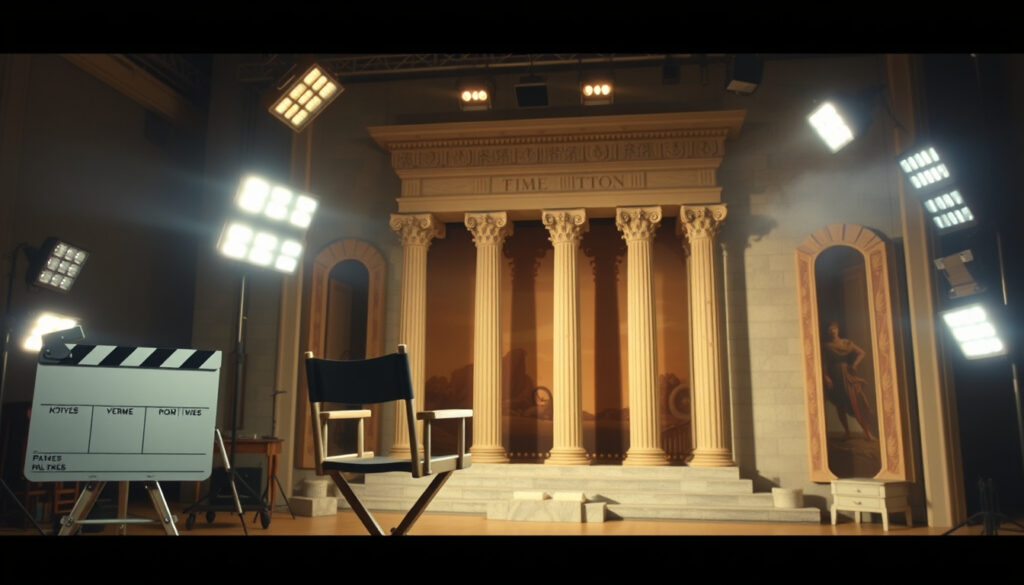
Hail, Caesar! 2016: Movie Review, History & Meaning
Few movies manage to be both a love letter to 1950s Hollywood and a playful history lesson, but the Coen brothers’ “Hail, Caesar!” does exactly that — following studio fixer Eddie Mannix as he juggles a kidnapped actor, communist screenwriters, and a pregnant starlet. With an 86% Rotten Tomatoes score, it’s a satire that rewards repeat viewings.
Release Year: 2016 ·
Director: Joel and Ethan Coen ·
Rotten Tomatoes Score: 86% ·
Historical Phrase Origin: 1st century AD ·
Box Office: $63.9 million ·
Starring: George Clooney, Josh Brolin, Scarlett Johansson, Channing Tatum
Quick snapshot
- Released in 2016 and directed by Joel and Ethan Coen (Wikipedia)
- Rotten Tomatoes critical score: 86% (Rotten Tomatoes)
- Eddie Mannix was a real MGM fixer in the 1950s (Wikipedia)
- Ancient Romans used “Ave Caesar” in some contexts (Sarah E. Bond (classicist))
- Whether gladiators actually shouted “Ave Imperator, morituri te salutant” in unison – only recorded by Suetonius (Sarah E. Bond (classicist))
- The exact origin of the English phrase “Hail, Caesar!” before the film (Wikipedia)
- Whether the opening studio-map image was intentionally designed to resemble a Roman army camp plan (Sarah E. Bond (classicist))
- No known record of “Hail, Caesar!” exactly as used in the film (Alternate Ending (film criticism))
- 1st century AD: Gladiators salute emperors with “Ave Imperator, morituri te salutant” (recorded by Suetonius) (Alternate Ending)
- 2014: Coen brothers announce production (Wikipedia)
- February 5, 2016: Theatrical release (Wikipedia)
- 2016–present: Public debate about historical accuracy of the phrase (Sarah E. Bond (classicist))
- Ongoing analysis by classicists and film critics keeps the conversation alive (Sarah E. Bond (classicist))
- Streaming availability on major platforms ensures new audiences continue to discover it (Sarah E. Bond (classicist))
Six key facts about the film, with one clear pattern: the Coens blend historical references with pure fiction.
| Category | Detail | Source |
|---|---|---|
| Release Date | February 5, 2016 (US) | Wikipedia |
| Director | Joel and Ethan Coen | Wikipedia |
| Genre | Comedy, Mystery | Wikipedia |
| Starring | George Clooney, Josh Brolin, Scarlett Johansson, Channing Tatum | Wikipedia |
| Historical Phrase | Ave Imperator, morituri te salutant | Sarah E. Bond (classicist) |
| Rotten Tomatoes | 86% | Rotten Tomatoes |
| Metacritic | 72/100 | Metacritic |
| Academy Award Nomination | Best Production Design | Wikipedia |
Is Hail, Caesar a Good Movie?
The critical consensus leans yes, but with a notable split between critics and general audiences. Here’s how the numbers break down.
- Rotten Tomatoes: 86% critic approval (based on 268 reviews) vs. 53% audience score (Rotten Tomatoes)
- Metacritic: 72/100, indicating “generally favorable reviews” (Metacritic)
Critical reception on Rotten Tomatoes
The 86% score places it within the top tier of Coen brothers comedies, though not their highest (Rotten Tomatoes (Coen brothers aggregate)). The consensus praises the ensemble cast and period detail while noting the episodic plot may frustrate some.
Audience vs critic scores
The wide gap (86% vs 53%) suggests the film’s dry, insider-Hollywood humor doesn’t play for everyone. Reviewers at Geeks Under Grace noted that casual viewers expecting a straightforward comedy may be left cold.
Comparison with other Coen brothers films
By comparison, “The Big Lebowski” holds an 80% critic score and “No Country for Old Men” sits at 93% (Rotten Tomatoes (Coen brothers aggregate)). “Hail, Caesar!” falls comfortably in the middle of their filmography — neither a masterpiece nor a misfire.
The trade-off: The film delights cinephiles with layered references but risks alienating viewers who don’t share the same depth of movie knowledge.
What Is the Point of Hail, Caesar?
The film is a day-in-the-life story set in 1951 at the fictional Capitol Pictures studio. The point isn’t a single plot — it’s a satirical look at Hollywood’s golden age, where every production is a crisis.
- Studio fixer Eddie Mannix (Josh Brolin) manages a kidnapping, a pregnant unmarried star, and a director who can’t decide on an ending (Wikipedia)
- The kidnapped star, Baird Whitlock (George Clooney), is taken by a communist writer’s group aiming to expose capitalist Hollywood (Geeks Under Grace)
- Subplots include a singing sailor musical, a western with an identity crisis, and a pregnant actress (Scarlett Johansson) (Wikipedia)
Plot summary: the kidnapping of Baird Whitlock
The central thread: Whitlock is filming a biblical epic called “Hail, Caesar! A Tale of the Christ” when he is drugged and taken by the “Future” — a group of communist screenwriters (Alternate Ending). Mannix must retrieve him without the press catching wind.
Themes of Hollywood in the 1950s
The Coens use each subplot to skewer different genres: musicals, westerns, biblical epics, and drawing-room dramas. The film’s nostalgic gloss is constantly undercut by the commercial and ideological pressures that shaped studio filmmaking (Sarah E. Bond).
Satire of studio system and religion
Mannix’s own Catholic guilt runs throughout — he confesses his sins, wrestles with a job offer from Lockheed, and ultimately chooses to stay at the studio. The film suggests that Hollywood itself has become a religion, with its own rituals, hierarchies, and crises of faith (Geeks Under Grace).
The implication: For history buffs, the film’s value lies in its period texture, not its narrative drive.
Is Hail, Caesar a True Story?
Technically no, but it borrows heavily from real people and events. The biggest link: Eddie Mannix.
- Eddie Mannix was a genuine MGM “fixer” in the 1930s–50s, handling scandals and keeping stars in line (Wikipedia)
- The film’s kidnap plot is entirely fictional — no such event happened at MGM (Geeks Under Grace)
- Other characters are composites: the singing sailor (Channing Tatum) riffs on Gene Kelly; the pregnant starlet (Scarlett Johansson) is inspired by Esther Williams (Alternate Ending)
Historical accuracy of the film
Reviewers have flagged anachronisms: the use of widescreen Cinemascope in 1951 (it debuted in 1953) and a reference to the Baths of Caracalla in a biblical epic set around 26 CE (the baths were built in the 3rd century) (Sarah E. Bond, Alternate Ending).
Real-life inspirations: Eddie Mannix
The real Mannix was a former police officer turned studio enforcer who helped cover up Clark Gable’s hit-and-run and other scandals. The film dramatizes his role but invents the kidnapping crisis (Wikipedia).
Fictional elements in the plot
Everything from the communist screenwriting group to the submarine rescue scene is fabricated. The Coens have said they wanted an “impressionistic” version of Hollywood, not a documentary (Alternate Ending).
The pattern: The Coens use real historical figures as jumping-off points for fictional scenarios, creating a layered satire that rewards attentive viewers.
Was ‘Hail, Caesar’ a Real Greeting in Ancient Rome?
The short answer: sort of, but not exactly as the film suggests. The Latin phrase “Ave Imperator, morituri te salutant” (Hail, Emperor, those who are about to die salute you) is the closest historical match.
- The phrase is recorded only once, by the historian Suetonius, as a salute from gladiators to Emperor Claudius around 52 CE (Alternate Ending)
- There is no evidence that Romans commonly greeted each other with “Hail, Caesar!” in everyday speech (Sarah E. Bond)
- The exact English phrase “Hail, Caesar!” is used in the film as a pun — both the title of the biblical epic and a generic Roman greeting (Geeks Under Grace)
Origin of the phrase
Suetonius’s “Life of Claudius” describes the gladiator salute, but most historians believe it was not a regular occurrence — it was a staged event to impress the emperor (Alternate Ending).
Ave Imperator, morituri te salutant
This Latin sentence translates directly to “Hail, Emperor, those who are about to die salute you.” It has become iconic in popular culture despite its dubious historicity (Sarah E. Bond).
Did Romans actually say ‘Hail, Caesar’?
The short “Ave Caesar” (Hail, Caesar) was used as a respectful greeting to the emperor, similar to “Ave Imperator.” But the exact wording popularized in movies — “Hail, Caesar!” — is a modern English translation that feels more theatrical than historical (Alternate Ending).
Why this matters: The film’s title plays on this ambiguity — the real “Hail, Caesar!” is not a sole greeting but a marketing hook that works because we imagine it was.
Does Channing Tatum Sing in Hail, Caesar?
Yes — and it’s one of the most talked-about scenes in the film. Tatum plays sailor Burt Gurney and performs the musical number “No Dames!” in a tap-dance sequence.
- The song is a parody of 1950s musical numbers, complete with sailor costumes and a crooning chorus (Wikipedia)
- Tatum trained in tap dance specifically for the role, and his performance was widely praised (Geeks Under Grace)
- The scene is a pastiche of classic MGM musicals like “On the Town” and “Anchors Aweigh” (Alternate Ending)
Channing Tatum’s musical number
Tatum’s “No Dames!” is a highlight: a comedic lament about sailors missing women while at sea, performed with precision choreography. The scene lasts about five minutes and is shot in a single take style (TV and Film Guy).
Choreography and song choice
The Coens and choreographer Mandy Moore recreated the energy of classic Hollywood musicals. Tatum performed many of the dance moves himself, undergoing weeks of rehearsal (Geeks Under Grace).
Reception of the scene
Critics universally cited the musical number as a standout. The scene earned Tatum some of the best notices of his career and is often referenced in discussions of the film’s best moments (Alternate Ending).
The implication: For musical theater fans, this scene alone makes the film worth watching, even if the rest of the plot does not cohere for everyone.
Timeline: From Roman Salute to Coen Brothers Satire
- 1st century AD – Gladiators salute Emperor Claudius with “Ave Imperator, morituri te salutant” (recorded by Suetonius) (Alternate Ending)
- 2014 – Coen brothers announce production of “Hail, Caesar!” (Wikipedia)
- February 5, 2016 – Theatrical release in the US (Wikipedia)
- 2016–present – Ongoing public and academic debate about the historical accuracy of the phrase (Sarah E. Bond)
Confirmed facts
- The film “Hail, Caesar!” was released in 2016 and directed by Joel and Ethan Coen (Wikipedia)
- The Rotten Tomatoes critical score is 86% (Rotten Tomatoes)
- Eddie Mannix was a real MGM fixer in the 1950s (Wikipedia)
- Ancient Romans used “Ave Caesar” in some contexts (Sarah E. Bond)
What’s unclear
- Whether gladiators actually shouted “Ave Imperator, morituri te salutant” in unison — only recorded by Suetonius (Alternate Ending)
- The exact origin and frequency of the phrase “Hail, Caesar!” in English before the film (Wikipedia)
- Whether the opening studio-map image was intentionally designed to resemble a Roman army camp plan (Sarah E. Bond)
- No known record of “Hail, Caesar!” exactly as used in the film (Alternate Ending)
Voices: Critics and Historians Weigh In
The film is an impressionistic copy of 1950s Hollywood rather than a documentary reconstruction. It gets the spirit right even when the details are wrong.
— Tim Brayton, Alternate Ending
The opening image of the studio map resembles a Roman army camp plan — a small but telling visual clue that the Coens are self-conscious about the connection between Hollywood and empire.
— Sarah E. Bond, Sarah E. Bond (classicist)
Editor’s note: For viewers interested in both cinema history and Roman history, “Hail, Caesar!” offers a rare blend of satire and scholarship. But the price of its playful anachronisms is a constant tension: enjoy the joke, or fact-check every frame. For the film buff, the recommendation is clear: watch it for the period texture and the musical number, not for historical fidelity. For the classicist, the trade-off is knowing that every “Ave” is a creative liberty — but that’s the point of the joke.
A thorough Hail, Caesar! film analysis reveals how the Coen brothers blend Hollywood satire with Roman history.
Frequently asked questions
What is the meaning of ‘Hail, Caesar!’ in the film?
The film’s title refers both to the biblical epic being produced inside the movie and to the ancient Roman greeting. It’s a pun that ties together the Hollywood satire and the historical layer.
Who plays Eddie Mannix?
Josh Brolin portrays Eddie Mannix, the studio fixer at the center of the story. Mannix is based on the real MGM executive of the same name (Wikipedia).
Is ‘Hail, Caesar!’ a comedy?
Yes, it is classified as a comedy mystery. The tone is satirical and farcical, though it also contains dramatic elements and period nostalgia (Wikipedia).
Is the film suitable for children?
The film is rated PG-13 for some suggestive content and language. Parents may want to preview for younger viewers, but it is generally considered mild compared to other Coen brothers films.
Where can I stream ‘Hail, Caesar!’?
As of early 2025, “Hail, Caesar!” is available on Netflix and Amazon Prime Video in several regions. Check local listings for availability.
What does ‘Ave Imperator, morituri te salutant’ mean?
The Latin phrase translates to “Hail, Emperor, those who are about to die salute you.” It is attributed to Roman gladiators greeting Emperor Claudius, though its historicity is debated (Alternate Ending).
How long is the movie?
The runtime is 1 hour and 46 minutes (106 minutes) (Wikipedia).
What is the song Channing Tatum sings in the film?
He performs “No Dames!,” a tap-dance number that parodies 1950s sailor musicals. The song was written specifically for the film (Wikipedia).
More related posts
 English to Turkish Translation – Best Free Tools for Travel
 Afghanistan National Cricket Team vs England Cricket Team Standings – Full Head-to-Head Records
 Cash Point Near Me: Free ATMs, Fees & Limits in Ireland
 William H. Macy – Age, Wife, Net Worth, Movies and TV Shows
 The Great House Giveaway: Host, Status, Where to Watch
 13 Stone in KG – Exact Conversion Guide and Charts
 Michael Aspel: Health, Marriage, Disabled Son, and Where He Lives Now
 Samantha Morton Movies and TV Shows – 40+ Films and TV Highlights