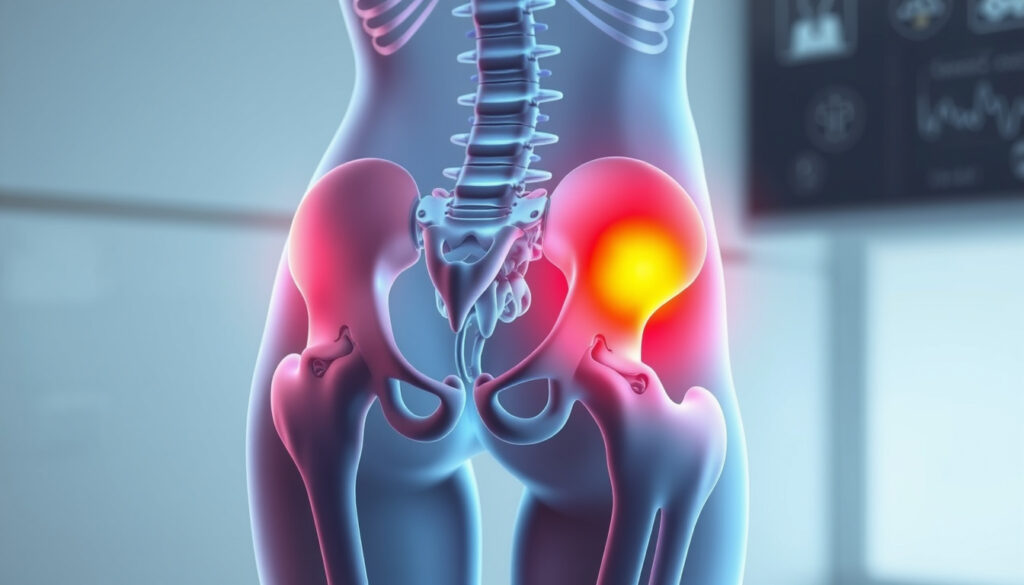
Pain in Right Hip Area in Females: Causes & When to Worry
If you’ve ever noticed an ache on the outside of your right hip that just won’t settle, you’re not alone—and you may have been treating the wrong thing. Research suggests that up to 90% of outer hip pain in women gets labeled as bursitis when it isn’t, which means countless prescriptions for rest and anti-inflammatories miss the mark entirely.
Outer Hip Pain Misdiagnosis: 90% not bursitis (Harvard Health Publishing) · GTPS Location: Outer hip and thigh (NHS Inform Scotland) · Female-Specific Causes: Pregnancy, pelvic floor (Medical News Today) · Hip Pain Sources: Multiple origins including FAI, dysplasia, spine referral, spondyloarthritis (PMC/NIH)
Quick snapshot
- 90% of outer hip pain is not bursitis (Harvard Health Publishing)
- Greater trochanteric pain syndrome is the more accurate label (NHS Inform Scotland)
- Exact prevalence of female-specific pelvic causes remains uncertain
- Individual response to treatment varies significantly
- Pain lasting more than 2 weeks warrants professional evaluation
- Night pain that disrupts sleep is a signal to seek care sooner
- Physical therapy and targeted exercises are first-line treatments (PubMed research)
- Imaging can clarify if structural issues like FAI are present (PubMed research)
The following table summarizes the most frequently misdiagnosed conditions and their clinical impact based on institutional research.
| Label | Value |
|---|---|
| Top Misdiagnosis | Bursitis (90% incorrect, Harvard Health Publishing) |
| GTPS Impact | Lateral hip/thigh pain (NHS Inform Scotland) |
| Female Causes | Pregnancy, pelvic floor (Medical News Today) |
| Hip Pain Sources | Arthritis, fractures, labral tears (Cleveland Clinic) |
What causes pain in the right hip in females?
The right hip can ache for reasons that span muscles, joints, nerves, and even nearby organs. According to a systematic analysis published in the NIH’s PMC database, four conditions alone account for 80% of hip pain cases that primary-care providers miss or misdiagnose in patients under 50: femoroacetabular impingement (FAI) syndrome, hip dysplasia, referred pain from the lumbar spine, and spondyloarthritis.
Among these, FAI syndrome leads the pack—it makes up 55.3% of undiagnosed or misdiagnosed cases in younger adults, the research found. Hip dysplasia accounts for another 13.3%, while referred spine pain accounts for 9.3% and spondyloarthritis for 7.3%.
Muscle injury
Muscle strains—especially in the hip flexors, glutes, and outer hip muscles—rank among the most common causes of right hip pain in women. These can result from overuse, sudden movement, or carrying heavy loads. The pain typically worsens with activity and improves with rest, though weak hip stabilizers can allow the problem to flare repeatedly.
Osteoarthritis
Osteoarthritis becomes more common after age 40 and is more prevalent in Caucasian populations (3–6%) compared to Black, Chinese, and Native American populations (1% or less). While primary hip osteoarthritis affects males more often than females, rheumatoid arthritis—a condition more common in women—frequently involves the hip joint and usually begins after age 40, according to data from the American Association of Hip and Knee Surgeons.
Pelvic floor conditions
Pelvic floor dysfunction occurs when the muscles supporting the bladder and reproductive organs become weak or uncoordinated. This can cause pain in the hip and groin region, along with incontinence, difficulty urinating, pain during intercourse, back pain, and sexual changes, according to Medical News Today.
Pregnancy-related
Pregnancy brings specific hip-related challenges. A study of 780 pregnant women in Australia found that 44% experienced pelvic girdle pain or symphysis pubic dysfunction (SPD), which causes sharp, stabbing pain in the pelvis, groin, or hips. The condition results from stiff pelvic joints or uneven movement patterns.
Pelvic girdle pain often resolves after delivery, but it can persist and requires targeted physical therapy rather than general rest.
Muscle injury and osteoarthritis represent the most straightforward causes, but female anatomy introduces pelvic floor dysfunction and pregnancy-related pain as distinct triggers that male-focused medical content often overlooks.
What can be mistaken for right hip pain?
Doctors often assume outer hip pain is bursitis, but studies suggest that up to 90% of the time, it isn’t. The more accurate label is greater trochanteric pain syndrome (GTPS), which describes pain on the lateral (outer) side of the hip and thigh, according to Harvard Health.
Greater trochanteric pain syndrome
GTPS affects the outer hip and thigh region and can involve gluteus medius tendon tears, trochanteric bursitis, or external snapping hip. The condition frequently gets misdiagnosed because symptoms overlap with simple muscle strain, IT band syndrome, and lower back referral.
Bursitis misdiagnosis
Bursitis pain is sharp and intense initially, then dulls over days or weeks. It often sits at the hip point, worsens at night, and spreads down the thigh. However, true bursitis accounts for a small fraction of lateral hip pain. Active patients are frequently told they have hip bursitis or tendinitis when the real cause is a deeper joint problem, such as a labral tear or femoroacetabular impingement, according to orthopaedic specialist Dr. Benjamin Domb.
The FADIR test (flexion, adduction, and internal rotation) can help differentiate intra-articular causes from soft tissue problems. It shows 94–99% sensitivity and 5–25% specificity for detecting hip joint pathology, the Physio Network analysis notes.
Treating GTPS as simple bursitis means patients receive anti-inflammatories and rest when they may actually need targeted strengthening or imaging to rule out deeper joint damage.
What is a red flag for hip pain?
Not all hip pain signals something serious, but certain patterns warrant faster action. According to the Physio Network’s differential diagnosis framework, several warning signs should prompt immediate or urgent medical evaluation.
Persistent pain
Hip pain that lasts beyond two weeks without improvement—or that keeps recurring—deserves professional attention. Ignoring persistent pain can lead to stiffness, weakness, and decreased range of motion that makes daily activities progressively harder, according to One Oak Medical.
Night pain
Pain that disrupts sleep or worsens when lying down is a meaningful signal. While GTPS and bursitis both cause night pain, so can serious conditions including bone infections, malignancies, and intra-articular infections—especially when accompanied by fever.
Cancer symptoms
Red flags specific to possible cancer include a history of prostate, breast, or gynaecological cancers (which can metastasize to the hip), unexplained weight loss, changes in bowel habits, and new pain that doesn’t fit a typical strain pattern. These warrant prompt imaging and specialist referral.
Burning with urination, unexplained weight loss, or a history of cancer in you or close family members should move hip pain from the “monitor it” pile to the “get seen now” pile.
When to worry about right hip pain?
Deciding when hip pain needs urgent attention versus watchful waiting comes down to a few specific markers. ThePhysio Network analysis identifies clinical signs that help differentiate hip-origin pain from spine-origin pain—because treatment paths diverge sharply depending on the source.
Sudden sharp pain
Sudden-onset sharp pain following trauma or heavy exertion warrants evaluation for fracture, labral tear, or avascular necrosis. Risk factors for avascular necrosis include alcohol abuse and corticosteroid exposure, both of which compromise blood supply to the femoral head.
Pain when walking
A limp while walking suggests the pain is seven times more likely hip-related than spine-related, according to the Physio Network analysis. Reduced hip internal rotation further increases that likelihood to 14 times. Functional limitations like these point toward structural hip pathology rather than referred pain.
Clinical evaluation should include the FABER test (pain intensifies with hip flexed, abducted, and externally rotated) and imaging—radiography of the hip and pelvis serves as the initial imaging test for hip pain, per PubMed research.
Hip pain that alters your gait, limits internal rotation, or appears suddenly after known risk factors (trauma, steroids, alcohol) should prompt imaging before assuming it’s a simple strain.
What does cancerous hip pain feel like?
Cancer-related hip pain often presents differently than common musculoskeletal causes, but it remains rare—and distinguishing features exist.
Bone cancer symptoms
Bone cancer affecting the hip typically causes pain that may be dull at first and progressively intensifies, pain that doesn’t improve with rest, and discomfort that worsens at night. Unexplained weight loss, fatigue, and a noticeable mass near the hip also warrant investigation, according to NHS guidance.
Diseases starting with hip pain
Hip pain can be an early manifestation of several systemic conditions. Spondyloarthritis (SpA) accounts for 7.3% of misdiagnosed hip pain cases and often involves inflammatory back pain that improves with movement. Hip osteoarthritis accounts for the majority of total hip replacements, with radiographic evidence visible before symptoms become severe.
Gynaecological cancers can also cause referred pain in the hip and groin region—meaning pain in the right hip doesn’t always originate from musculoskeletal structures, the Physio Network analysis notes.
What experts say
Doctors often assume outer hip pain is bursitis, but 90% of the time it’s not. The real cause is usually greater trochanteric pain syndrome, which requires a different treatment approach.
— Dr. Lauren Elson, Harvard Health Publishing
Greater trochanteric pain syndrome is a common painful condition affecting the outer side of the hip and thigh. It can involve the gluteus medius tendon, trochanteric bursa, or external snapping hip.
— NHS Inform Scotland
Active patients are frequently told they have hip bursitis or tendinitis when the true cause is a deeper joint problem requiring more specific intervention.
— Dr. Benjamin Domb, orthopaedic specialist
Related reading: Symptoms of High Blood Pressure in Women · Naproxen Dosage Per Day
physio-network.com, orthosurgery.ucsf.edu, benjamindombmd.com, meeting.aahks.net, oneoakmedical.com, dralisongrimaldi.com, alfredmansourmd.com, acatoday.org, gponline.com
Frequently asked questions
What causes sudden sharp pain in right hip that comes and goes in females?
Sudden sharp pain that comes and goes may indicate labral tears, hip impingement, or gluteus medius tendon irritation. These conditions often flare with specific movements or positions and may temporarily resolve between episodes. Structural conditions like femoroacetabular impingement are a common culprit in younger women.
What causes throbbing pain in right hip area in females?
Throbbing pain often suggests inflammatory or circulatory components. Hip osteoarthritis, bursitis, or vascular issues like avascular necrosis can produce throbbing sensations. Pregnancy-related pelvic girdle pain may also present as throbbing in the hip region due to joint instability.
What causes pain in right hip area in females at night?
Night pain in the hip region commonly occurs with bursitis (trochanteric bursitis worsens when lying on the affected side), GTPS, hip osteoarthritis, or inflammatory conditions. If night pain disrupts sleep regularly, imaging and blood tests can rule out infection or malignancy.
What is treatment for pain in right hip area in females?
First-line treatment typically includes rest from aggravating activities, targeted physical therapy to strengthen hip stabilizers, and anti-inflammatory medications. If structural issues like FAI, labral tears, or hip dysplasia are present, arthroscopic surgery often yields good outcomes, according to PubMed research. Pelvic floor physical therapy addresses female-specific pelvic causes.
What causes pain in right hip area in females when walking?
Pain with walking often points to hip joint pathology rather than soft tissue strain. A visible limp increases the likelihood that the source is hip-related by seven times, according to clinical research. Common causes include hip osteoarthritis, FAI, hip dysplasia, and IT band syndrome.
Can kidney issues cause pain in right hip area in females?
Kidney infections or kidney stones can cause referred pain in the flank that radiates to the hip or groin region. Burning with urination alongside hip pain may suggest a urinary tract infection rather than a musculoskeletal cause, according to clinical guidance.
What are home remedies for pain in right hip area in females?
Gentle stretching (especially hip flexors and glutes), applying ice for acute pain or heat for chronic stiffness, maintaining hip strength through low-impact exercise like swimming or cycling, and managing weight to reduce joint load all support recovery. However, home remedies work best when the underlying cause is identified—if pain persists beyond two weeks, professional evaluation is warranted.
More related posts
 Valentino Born In Roma Intense – Uomo vs Donna Comparison
 Kola Bokinni: Ted Lasso Actor’s Nationality and Family
 Fearne Cotton: Jaw Tumour Surgery, Split, and Rift Facts
 How to Create a New Gmail Account: Step-by-Step Guide
 The 1% Club – Format, Questions and Key Facts
 Ike Turner: Life, Death, and Troubled Legacy
 MC Hammer Downfall, Net Worth 2025, and What He Does Today