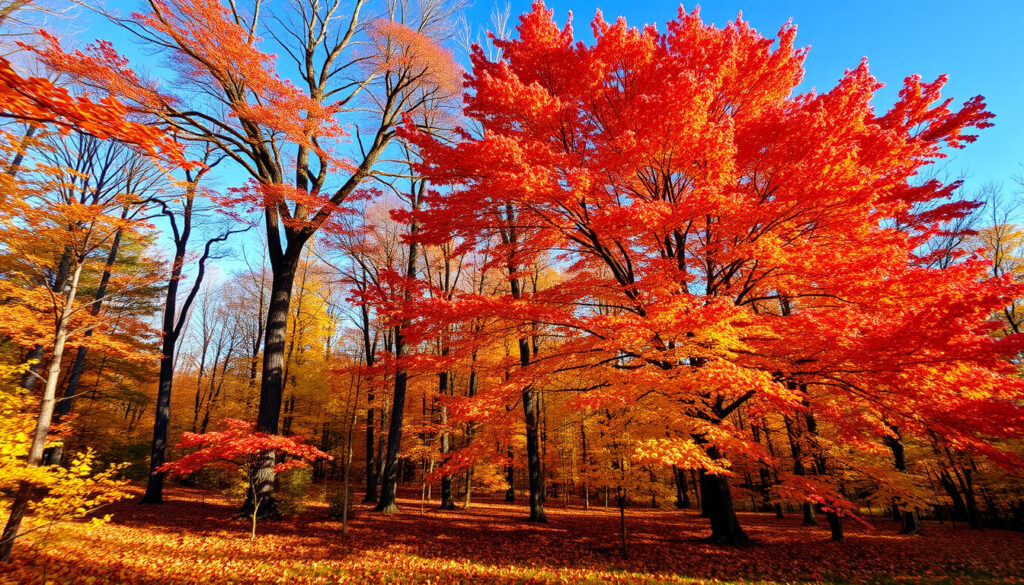
First Day of Autumn 2025: September 22 Date Confirmed
Autumn arrives on Monday, September 22, 2025 — and the exact moment it happens might surprise you depending on where you stand on the globe. The astronomical event that marks the season’s start won’t happen at the same clock time for someone in New York as it does for someone in London, which is why the “first day of autumn” can feel slightly different depending on which definition you follow. This piece untangles the astronomy, the time zones, and the two competing calendars scientists and forecasters actually use.
Astronomical Start: September 22, 2025 · Equinox Time (BST): 19:20 · End Date: December 21, 2025 · Duration: 89–93 days
Quick snapshot
- Equinox UTC: 18:19 on September 22 (Wikipedia September equinox)
- UK/Ireland BST: 19:20 on September 22 (Sky at Night Magazine)
- USA EDT: 14:19 on September 22 (AccuWeather)
- Exact local minute for locations west of time zone centers
- Whether Pacific Northwest observes EDT or PDT at moment of equinox
- 2026 equinox shifts to September 23 00:05 UTC (Royal Museums Greenwich)
- Equinox date floats September 21–24 across years (Royal Museums Greenwich)
- Winter solstice arrives ~December 21, 2025
- USA DST ends November 2; Ireland DST ends October 26
| Label | Value |
|---|---|
| Official Start 2025 | Monday, September 22 |
| Equinox Moment BST | 19:20 |
| Season Length (astronomical) | 89–93 days |
| Season Length (meteorological) | 91 days |
| Source Confirmation | Met Office, BBC, NOAA |
What day does autumn officially start in 2025?
Astronomical autumn begins on Monday, September 22, 2025. The September equinox that marks this transition occurs at exactly 18:19 UTC, according to the Wikipedia September equinox table — a timestamp verified across multiple independent sources including AccuWeather and Sky at Night Magazine. This is the moment when the Sun crosses the celestial equator moving southward, and day and night are roughly equal in length worldwide.
Astronomical definition
The astronomical definition ties the seasons to Earth’s position in its orbit around the Sun. When the Sun’s direct rays cross the equator from north to south — the autumnal equinox — astronomical autumn begins in the Northern Hemisphere. NOAA’s National Centers for Environmental Information (NCEI) explains that these dates fall between September 21 and 23 because Earth’s orbit is elliptical, not circular, causing the exact moment to shift each year. The word “equinox” comes from the Latin aequus (equal) and nox (night), describing the balanced split between daylight and darkness.
For most practical purposes, September 22 is the anchor date — but the precise UTC minute matters if you’re scheduling a live-stream of the equinox or timing a celestial event across multiple continents.
Time zone variations
The equinox moment translates differently across time zones:
- UTC: 18:19 on September 22 (Wikipedia September equinox)
- UK/Ireland (BST, UTC+1): 19:20 on September 22 (Sky at Night Magazine)
- USA Eastern (EDT, UTC-4): 14:19 on September 22 (AccuWeather)
- USA Pacific (PDT, UTC-7): 11:19 on September 22
Both the USA and Ireland remain in daylight saving time at the moment of equinox in 2025. This means American observers on the East Coast see the equinox at 14:19 EDT, while Irish observers see it at 19:20 IST — five hours apart on the same UTC day.
Meteorological alternative
Meteorologists use a simpler calendar. The NCEI defines meteorological autumn as September 1 through November 30 — exactly three months of consistent 91-day length. This gives forecasters and climate researchers fixed, predictable boundaries that don’t shift year to year. The Royal Meteorological Society confirms that UK and Ireland weather services follow the same September 1 start date.
Is September 22 always the first day of fall?
No. The astronomical equinox falls on September 22 in most years, but it drifts between September 21 and 24 due to the mismatch between the calendar year (365 days, or 366 in a leap year) and the tropical year (approximately 365.2422 days). Wikipedia’s September equinox table shows 2025 lands on September 22, while 2026 shifts to September 23 at approximately 00:05 UTC, according to Royal Museums Greenwich.
Yearly variations due to equinox
The September equinox has occurred on all four dates in the September 21–24 range within recent decades. This is not an error or approximation — it’s a feature of how human calendars interact with celestial mechanics. The tropical year doesn’t divide evenly into 24-hour days, so the equinox “slips” slightly later in the calendar each year until a leap year jumps it back.
Leap year effects
Leap years create a small but measurable jump. After a February 29, the equinox date often shifts earlier in the calendar by a day compared to the previous non-leap year pattern. This effect compounds over centuries, which is why the equinox will occasionally land on September 21 or 24.
For climate data collection, this unpredictability is exactly why meteorologists prefer fixed dates. A scientist comparing autumn temperatures across 2024, 2025, and 2026 needs the same September 1 start point — not a moving target that shifts the entire season’s data window.
Historical examples
Checking the Wikipedia September equinox record: 2024 brought the equinox on September 22 at 12:44 UTC, while 2023 landed on September 23. The 2024 equinox occurred nearly six hours earlier than the 2025 moment — a stark illustration of how much the exact UTC time bounces around even when the calendar date stays stable.
What does equinox mean?
The term “equinox” comes from the Latin aequus (equal) and nox (night). Sky at Night Magazine explains that on this day, the Sun sits precisely above Earth’s equator, spending equal time above and below the horizon at every latitude. For an observer at the equator, the Sun passes almost directly overhead at noon — a moment captured in ancient architecture from Stonehenge to Chichen Itza.
Definition and science
The equinox is a precise astronomical instant, not a day-long event. Wikipedia’s September equinox entry describes it as the point when the Sun crosses the celestial equator moving southward — the official transition from summer to autumn for the Northern Hemisphere. The NCEI notes that the defining feature is the Sun’s declination relative to Earth’s equatorial plane, which creates the equal-day-equal-night phenomenon.
Autumnal vs spring equinox
The September equinox marks the autumnal equinox in the Northern Hemisphere — the transition into fall. Simultaneously, the Southern Hemisphere experiences its spring equinox. The two are opposites: when leaves turn golden in New York, they are just budding in Buenos Aires. AccuWeather Senior Meteorologist Melissa Constanzer has explained this symmetry as a fundamental feature of Earth’s axial tilt relative to the Sun.
Day-night balance
While “equal day and night” is the poetic shorthand, the reality is slightly nuanced. Atmospheric refraction lifts the Sun slightly when it’s near the horizon, meaning daylight is actually a few minutes longer than darkness on the equinox. At 50°N latitude — roughly the line from London to Winnipeg — there are approximately 12 hours and 10 minutes of daylight on September 22, with the extra minutes coming from the Sun being visible above the horizon before it truly rises or sets.
“The official beginning of fall in the Northern Hemisphere is on Sept. 22, at 2:19 EST.”
— AccuWeather
When does autumn start and end?
Two definitions give two answers: astronomical autumn starts at the equinox on September 22 and ends at the winter solstice around December 21, giving a season of roughly 89–93 days that varies by year. Meteorological autumn starts consistently on September 1 and ends November 30, always exactly 91 days. NOAA’s NCEI notes that the variable length of astronomical seasons reflects Earth’s elliptical orbit, where the planet moves faster when closer to the Sun.
Full 2025 season dates
- Astronomical autumn: September 22, 2025 (equinox) → December 21, 2025 (winter solstice)
- Meteorological autumn: September 1 → November 30, 2025
- USA DST ends: November 2, 2025 (NCEI)
- Ireland DST ends: October 26, 2025
After the USA returns to standard time on November 2, the same UTC moment (18:19) converts to 13:19 EST instead of 14:19 EDT — making the equinox moment technically one hour “earlier” on the clock, even though nothing changed in the sky.
Regional differences USA Ireland
Both the USA and Ireland follow the same meteorological September 1 start for autumn — the Royal Meteorological Society confirms this applies equally to UK and Irish weather services, meaning climate data is directly comparable across these regions. The astronomical equinox time differs due to time zone offsets: 14:19 EDT in the USA versus 19:20 IST in Ireland on the same UTC day.
Meteorological calendar
The AccuWeather explanation describes why meteorological seasons exist: they give agriculture, commerce, and climate researchers a consistent 91-day framework that never shifts. NCEI applies this consistently across all USA climate records, while Royal Meteorological Society does the same for UK and Ireland. No regional variation exists between USA and Ireland for meteorological autumn — both use the identical September–November definition.
What occurs on September 22 or 23?
On September 22, 2025, the Sun crosses the celestial equator at 18:19 UTC, the precise moment of the autumnal equinox. This instant marks the astronomical start of autumn for the entire Northern Hemisphere — from Canada’s prairie provinces to Morocco’s Atlas Mountains. Cultural traditions around this date range from harvest festivals to astronomical observation events, with observatories like Royal Museums Greenwich hosting public viewings of the equinox sky.
Equinox events
Astronomical institutions and science museums frequently schedule special events around the September equinox. The Sky at Night Magazine coverage notes that 2025’s equinox arrives on September 22, with the following year shifting to September 23 — a pattern that drives interest in the specific dates. Many planetariums schedule their autumn programming around this window, when the Milky Way’s orientation offers optimal evening viewing in the Northern Hemisphere.
Cultural traditions
Harvest festivals across East Asia coincide with the Mid-Autumn Festival (Mid-Autumn Moon Festival), which falls close to the September equinox. In Western cultures, the equinox often appears in media as a marker of seasonal change — the “first day of fall” reference point in weather forecasts, fashion guides, and food writing. AccuWeather Senior Meteorologist Melissa Constanzer has noted that this cultural weight is part of why people care about the precise date — it marks an invisible shift in how the light feels.
Weather shifts
Beyond the calendar, September 22 marks a climatological turning point. Daylight hours drop below 12 hours at mid-latitudes, triggering the biological signals that drive leaf color change. NCEI data shows that average temperatures in the Northern Hemisphere begin their steepest decline in the three weeks following the equinox, even as meteorological autumn has technically been underway since September 1. This gap between the “official” and “felt” season is one reason some people are surprised to learn the equinox is still three weeks away on September 8.
“Meteorologists divide the seasons up according to weather rhythms and the Gregorian calendar.”
— Royal Meteorological Society
The pattern across 2024–2026 illustrates the shiftiness: 2024 brought the equinox at 12:44 UTC on September 22, 2025 arrives at 18:19 UTC on the same date, and 2026 pushes to September 23 at 00:05 UTC. This drift — from morning to evening to the next calendar day — is why “September 22” is the safe shorthand but never the guaranteed answer on its own.
Related reading: Budget 2025 Ireland date
The precise autumnal equinox at 18:19 UTC on September 22, as covered in the equinox facts overview, clarifies astronomical versus meteorological season starts.
Frequently asked questions
What is the first day of autumn 2025 in the USA?
Astronomical autumn in the USA begins on September 22, 2025, at 14:19 EDT (Eastern Daylight Time, UTC-4). USA DST remains active until November 2, 2025. Meteorological autumn begins September 1, consistent with NOAA’s NCEI definitions.
What is the first day of autumn 2025 in Ireland?
Astronomical autumn in Ireland begins on September 22, 2025, at 19:20 IST (Irish Standard Time, UTC+1), since Ireland remains in summer time at the equinox. Ireland DST ends October 26, 2025. Meteorological autumn begins September 1, aligned with UK practice per the Royal Meteorological Society.
What is the last day of autumn 2025?
Astronomical autumn ends at the winter solstice, which occurs around December 21, 2025. Meteorological autumn ends on November 30, 2025 — exactly 91 days after the September 1 start, per AccuWeather.
What is the winter solstice 2025 date?
The winter solstice falls on approximately December 21, 2025 — the day the Northern Hemisphere experiences its shortest daylight period. This marks the end of astronomical autumn and the start of astronomical winter. The exact UTC minute varies slightly year to year within the December 21–22 window.
Is there a first day of autumn 2025 holiday?
September 22, 2025 is a civic holiday in no major country. No national holidays coincide with the astronomical equinox in the USA, UK, or Ireland in 2025. Some cultures mark the date with harvest festivals or religious observances, but there is no official public holiday tied to it.
What are the first signs of autumn?
The most noticeable early signs of autumn include dropping temperatures (most pronounced in the two weeks after the equinox), diminishing daylight hours below 12 per day, and the onset of leaf color change in deciduous trees. These biological signals respond to photoperiod — the changing day length — rather than the calendar date.
How does axial precession affect seasons?
Axial precession — the slow wobble of Earth’s axis over a ~26,000-year cycle — gradually shifts which zodiac constellation the Sun occupies at each solstice and equinox. This cycle (known as the precession of the equinoxes) means that in about 13,000 years, Northern Hemisphere summer and winter positions will be swapped relative to Earth’s perihelion and aphelion. It does not change the current equinox dates, which remain governed by the shorter-term mismatch between the calendar and tropical year.
More related posts
 Jeremy Allen White: Sobriety, Divorce, Kids, and More
 Rio Ngumoha: Bio, Stats, Transfer Fee and Family
 Best Travel Credit Cards No Fees – Top 2025 Picks
 Is Coffee Good for You? Benefits, Risks & Research
 Grimsby Town F.C. – League, History, Stadium and Facts
 Virgin Money Contact Number UK 0800 – Official Free Helplines & Hours
 KFC Stranger Things Burger – Calories, Availability and Facts
 Harbour Hotel St Ives: Breakfast, Pool & Location Guide