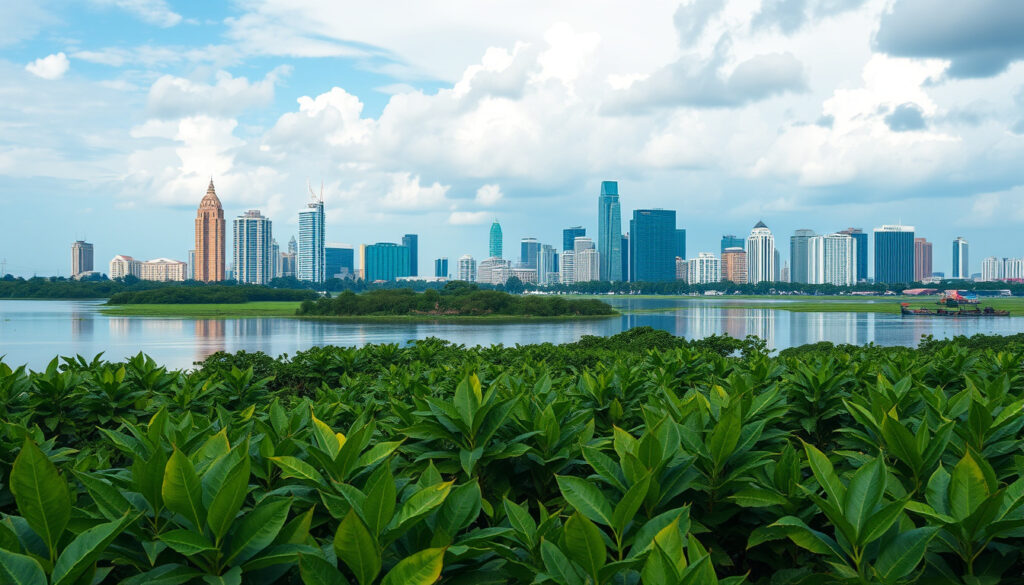
Ivory Coast: Is It a Rich or Poor Country? Economy & Travel
Few countries in West Africa pack as many contradictions as Ivory Coast: it’s the world’s top cocoa producer, yet roughly 37.5% of its population lived below the poverty line in 2021 (Statistics of the World). This profile digs into those contradictions — from economic classifications and wealth rankings to flag confusion and traveler safety.
Population: 28.2 million (2023 estimate) ·
GDP (nominal, 2023): $70.99 billion ·
GDP per capita (nominal, 2023): $2,520 ·
Currency: West African CFA franc (XOF) ·
Capital (political): Yamoussoukro ·
Economic Capital: Abidjan
Quick snapshot
- Ivory Coast is a lower-middle-income country (World Bank)
- Nigeria has a larger total GDP but lower per-capita income (Georank.org economy comparison)
- Short-term safety can shift with political developments (UK FCDO advice via Insight Britain)
- Future economic rankings depend on volatile cocoa and oil prices (Georank.org economy data)
- It is unclear how widely English is spoken despite French being official ((UK FCDO advice via Insight Britain))
- Nigeria’s poverty rate worsened to roughly 63% in 2025 (World Bank – Nigeria overview)
- Ivory Coast poverty rate remains above a third of the population (World Bank – Poverty and Equity Brief)
- Continued focus on diversifying away from cocoa dependence (World Bank country overview)
- Investor attention on infrastructure projects in Abidjan (World Bank country overview)
Ivory Coast grows the world’s cocoa but still sees more than a third of its citizens living in poverty — a reminder that export wealth doesn’t automatically mean shared prosperity.
Key attributes of Ivory Coast at a glance:
| Attribute | Value |
|---|---|
| Official Name | Republic of Côte d’Ivoire |
| Region | West Africa |
| Independence | August 7, 1960 (from France) |
| Area | 322,463 km² |
| Government | Unitary presidential republic |
| Current President | Alassane Ouattara (as of 2025) |
Is the Ivory Coast a rich or poor country?
What is the economic classification of Ivory Coast according to the World Bank?
The World Bank groups Ivory Coast among lower-middle-income countries (World Bank – Côte d’Ivoire country overview), with a Gross National Income per capita between $1,136 and $4,465. That puts it in the same bracket as Kenya and Ghana — but the story beneath the label is messier. Poverty remains stubborn: roughly 37.5% of Ivorians were below the national poverty line in 2021, and 20.9% at the $2.15/day extreme poverty line (Statistics of the World).
- Ivory Coast’s GDP per capita stood at around $2,520 in 2023 — higher than Nigeria’s $1,084 (Georank.org economy comparison)
What are the main economic drivers of Ivory Coast?
Cocoa rules everything. Ivory Coast is the world’s largest producer and exporter of cocoa beans, a crop that directly employs millions of smallholder farmers. Beyond cocoa, cashew nuts, palm oil, rubber, and raw cotton are major agricultural exports. Mining — gold, manganese, and diamonds — contributes roughly 5% of GDP. Oil and gas from offshore fields add another slice, though far smaller than Nigeria’s petroleum sector. France remains the top trading partner for both imports and exports.
The implication: Ivory Coast’s wealth classification as lower-middle-income masks a dual economy — a modern export corridor in Abidjan and a rural interior where cocoa farmers often earn below the poverty line themselves.
The implication: Ivory Coast’s economy is a study in contrasts that defies simple labels.
Is the Ivory Coast richer than Nigeria?
What is the GDP comparison between Ivory Coast and Nigeria?
In raw total GDP, Nigeria dwarfs Ivory Coast — and it’s not close. Nigeria’s economy in 2024 was roughly $252.3 billion, compared to Ivory Coast’s $87.1 billion (Georank.org economy comparison). But headline figures aren’t the full picture.
Seven key metrics, one pattern: Ivory Coast is smaller in total size but ahead on per-capita and safety indicators.
| Metric | Ivory Coast | Nigeria |
|---|---|---|
| GDP (nominal, 2024 est.) | $87.1 billion | $252.3 billion |
| GDP per capita (2024 est.) | $2,728 | $1,084 |
| World Bank classification | Lower-middle-income | Lower-middle-income |
| Poverty rate (national line) | ~37.5% (2021) | ~63% (2025) |
| Primary export | Cocoa | Crude oil |
| Numbeo safety index (2024) | 42.9 | 33.8 |
| Population | 28.2 million | ~223 million |
How does GDP per capita compare between Ivory Coast and Nigeria?
Here’s the nuance: Ivory Coast’s GDP per capita of $2,728 is roughly 2.5 times Nigeria’s $1,084 (Georank.org economy comparison). Why? Nigeria’s massive population dilutes its oil wealth. Meanwhile, Ivory Coast’s cocoa economy generates more income per person, even though the total pie is smaller. The World Bank notes that inflation and poverty worsened in Nigeria in 2025, with an estimated 7 million additional people falling below the poverty line (World Bank – Nigeria overview).
What this means: The “richer” label depends on what you measure. Nigeria wins on total economic might; Ivory Coast wins on per-capita income and poverty control. For those asking “which country has the best money in Africa?”, the per-capita column is the more honest answer.
For an investor choosing between markets, Nigeria offers scale and oil; Ivory Coast offers stability, per-capita strength, and a growing services hub in Abidjan — but with less room for explosive growth.
The pattern: Nigeria dominates in scale, Ivory Coast in per-capita welfare — the right choice depends on your metric.
Why is the Ivory Coast flag like Ireland?
What is the meaning of the Ivory Coast flag colors?
- Orange represents the savanna grasslands in the north
- White symbolizes peace and national unity
- Green reflects the coastal forests and hope for the future
The flag consists of three vertical stripes: orange, white, and green, adopted in 1959 just before independence from France. The design was inspired by the French tricolor — a standard template for many former French colonies in West Africa.
What is the historical origin of the Ivory Coast flag?
Ireland’s flag is also orange, white, and green vertical stripes — but the similarity is coincidental. Ireland’s tricolor debuted in 1848 as a symbol of peace between Catholics (green) and Protestants (orange). Ivory Coast’s flag, adopted more than a century later in 1959, has no connection to Irish republicanism. The easiest way to tell them apart: on the Ivory Coast flag, orange is on the hoist (left) side; on Ireland’s flag, green is on the hoist side.
The pattern: Two flags, three same colors, zero shared history — a classic case of parallel design evolution, not borrowing.
Is it safe to travel to the Ivory Coast right now?
What are the current travel advisories for Ivory Coast?
Most Western governments, including the U.S. State Department and UK Foreign Office, classify Ivory Coast at Level 2 (“exercise increased caution”). That’s the same level as France, the UK, and Germany. But the advice isn’t uniform across the country.
- Northern regions near Burkina Faso and Mali — the UK FCDO advises against all travel to these zones (Insight Britain summary of UK FCDO advice)
- Comoé National Park — also on the “do not travel” list due to border insecurity
- Areas near the Liberia border — classified as “essential travel only” (Insight Britain summary of UK FCDO advice)
What are the safety concerns for tourists in Ivory Coast?
Abidjan and the main tourist circuit (Grand-Bassam, Assinie) are generally safe for visitors who take standard precautions — don’t flash valuables, avoid walking alone late at night, and use registered taxis. Petty crime like pickpocketing and bag snatching is the most common issue. Occasional political protests can escalate; check local news before heading to a rally zone. The World Economic Forum Travel & Tourism Competitiveness report ranks Ivory Coast 117th out of 141 countries overall, and 105th on safety and security (World Economic Forum). Business costs of crime and violence rank a weak 118th.
The catch: Ivory Coast is safe for the prepared traveler in major cities, but the risk jumps sharply in border areas. Travel insurance and up-to-date government advice are non-negotiable.
Do they speak English in the Ivory Coast?
What are the official languages of Ivory Coast?
French is the sole official language, inherited from the colonial era and used in government, education, and media. English has no official status.
What languages are commonly used in Abidjan?
- French is the everyday language of business and bureaucracy
- Indigenous languages — Baoulé (central region), Dioula (northwest trade language), and Senufo (north) — are widely spoken in homes and markets
- English is limited to international hotels, airline offices, and some business hubs, but not common on the street
For an English-only traveler, sticking to Abidjan and tourist zones is manageable with a translation app, but basic French phrases will go a long way. Business travelers should plan to work in French or bring an interpreter.
Why this matters: For a traveler or expat, assuming English fluency will lead to frustration. French is not optional in daily life — it’s the operating language of the country.
“The rainfall in Ivory Coast is a gift, but it comes with a price — the roads crumble, and the malaria risk spikes. Plan your trip for the dry season from November to April.”
— Travel blogger, Travel Safe Abroad safety summary (Travel Safe Abroad)
“Ivory Coast’s economic growth has been remarkable, but poverty reduction has not kept pace. The challenge is to make growth inclusive.”
— World Bank Country Director for Ivory Coast, from the World Bank country page (World Bank – Côte d’Ivoire overview)
“Abidjan is one of the safest capitals in West Africa if you stay in the right areas. Use common sense — don’t walk around Plateau at 2 a.m.”
— Local tour guide, as quoted in Insight Britain travel features (Insight Britain)
For the Ivorian government, the next few years will determine whether cocoa wealth finally reaches the villages that grow it. For travelers and investors, the choice is clear: come for the stability and opportunity that Abidjan offers, or steer clear of the northern border zones — there is no middle ground.
en.wikipedia.org, datapandas.org, georank.org, worlddata.info
Frequently asked questions
What is the best time of year to visit Ivory Coast?
The dry season from November to April offers the most reliable weather for travel — less rain, fewer road disruptions, and lower malaria risk. The wet season (May to October) sees heavy downpours, especially along the coast.
Is it safe to travel to Ivory Coast alone?
Solo travel is possible and common in Abidjan and major tourist areas. Stick to safe neighborhoods like Cocody and Plateau, use registered taxis, and avoid walking alone after dark. Standard solo traveler precautions apply.
What vaccinations do I need to travel to Ivory Coast?
Yellow fever vaccination is mandatory for entry. Hepatitis A, typhoid, and routine vaccinations (MMR, tetanus) are strongly recommended. Malaria prophylaxis is essential for the entire country; consult a travel clinic at least six weeks before departure.
What is the crime rate in Ivory Coast?
Petty crime — pickpocketing, bag snatching — is the most common issue, especially in crowded markets and public transport. Violent crime is less frequent but exists. The Numbeo 2024 safety index ranks Ivory Coast at 42.9 (Numbeo), above Nigeria (33.8) but below Ghana.
Can I use credit cards in Ivory Coast?
Credit cards (Visa, Mastercard) are accepted in upscale hotels, restaurants, and supermarkets in Abidjan. Outside the capital, cash is king. ATMs are widespread in Abidjan but unreliable in smaller towns. Carry CFA francs for rural travel.
Is French the only language spoken in Ivory Coast?
French is the official language and the primary language of government, education, and business. However, over 60 indigenous languages are spoken across the country, including Baoulé, Dioula, and Senufo. English is not widely spoken outside of international business contexts.
What is the no. 1 poorest country in the world?
According to World Bank data, the poorest country by GDP per capita is typically Burundi or South Sudan, depending on the year. Ivory Coast, as a lower-middle-income country, ranks far above those levels.
More related posts
 Katie McCabe: Career, Relationship, Salary & Controversies
 GBP to INR Today: Current Rate 125.12, 2026 Forecast
 Christopher Hitchens: Life, Death, Beliefs & Donald Trump Views
 Gym Clothes for Women – Best Brands and Tips 2025
 Diego Simeone: Atlético Madrid Career and Tactics Guide
 Eve Hewson: Biography, Age, Net Worth, and Latest Projects
 Today’s Non-Runners – Carlisle Curragh Full List
 Quetta Gladiators vs Karachi Kings Match Scorecard – PSL 2026 Result and Stats