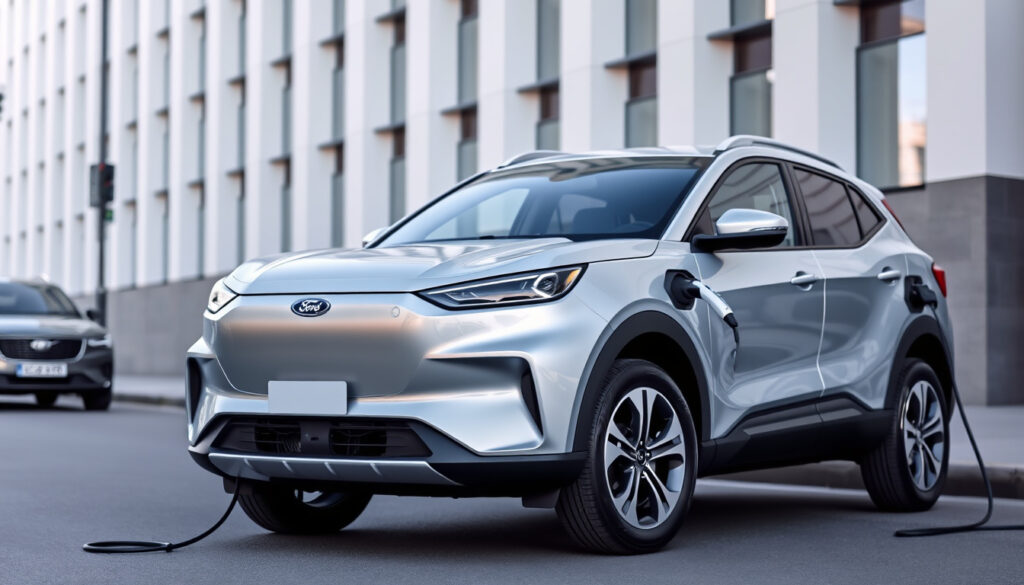
Ford Puma Gen-E Review: Range, Price, Problems & More
You know that feeling when a car ticks the city box but leaves you worrying about the weekend trip? The Ford Puma Gen-E is Ford’s attempt to squash that anxiety with an all-electric SUV that promises genuinely useful range and a boot that rivals cars twice its size. With a WLTP figure of 376 km from a 43 kWh battery, it’s aiming to be the practical EV for European buyers who don’t want to compromise on space or charging speed.
Starting price (Ireland): €32,916 ·
DC fast charging: 100 kW ·
10–80% charge time: 23 minutes
Quick snapshot
- WLTP range up to 376 km (Ford Ireland, official manufacturer)
- 100 kW DC fast charging, 10–80% in 23.2 min (Ford Ireland) (Ford Ireland, official manufacturer)
- 574-litre boot (including under-floor storage) (Cinch, UK car buying guide)
- 12-inch SYNC 4 touchscreen with wireless Apple CarPlay (Cinch) (Ford Ireland, official manufacturer)
- Real-world range in cold weather (not yet independently tested)
- Long-term reliability data for the EV drivetrain
- Official 0–62 mph time from Ford (estimated ~8.0 sec by early reviewers)
- Heat pump availability across all trims
- Starting price (dealer-dependent, may vary by market)
- 0–62 mph in ~8.0 seconds (YouTube review, motoring channel)
- Single motor, 100 kW (136 hp) (Ford Ireland)
- Low centre of gravity from floor-mounted battery (YouTube review) (YouTube review, motoring channel)
- Broader rollout across European markets in Q1 2026
- Potential higher-performance variant (ST?) if demand supports
- Ford likely to update Puma hybrid line—watch for discontinuation signals
Six key specs that define the Ford Puma Gen-E at a glance, from pricing to charging time.
| Specification | Value |
|---|---|
| Starting price (Ireland) | €32,916 |
| WLTP range | up to 376 km (233 miles) |
| DC fast charging | 100 kW, 10–80% in 23 min |
| Home charging | 11 kW AC, 0–100% ~7.5 hours |
| Boot capacity | 574 litres |
| Motor power | 100 kW (136 hp) |
Is the Ford Puma Gen-E any good?
Performance and driving experience
- Acceleration is adequate for city driving: 0–62 mph takes roughly 8 seconds according to a 2026 YouTube review (motoring channel review).
- The single motor drives the front wheels, and the low centre of gravity from the floor-mounted battery gives it planted cornering.
- Early reviewers note it feels more sprightly than the 136 hp figure suggests, thanks to instant torque.
Interior quality and technology
- Twin-screen setup: 12-inch SYNC 4 infotainment plus a 12.8-inch digital driver display, shared with the regular Puma (Cinch).
- Wireless Apple CarPlay and Android Auto are standard.
- Material quality is a step up from the previous generation, though some hard plastics remain on lower door panels.
Value for money
- Starting at €32,916 in Ireland after subsidies (Finlay Motor Group, Irish dealer).
- Premium trim at €35,717 adds larger wheels, LED headlights, and upgraded seats.
- Running costs: significantly lower than petrol Puma due to home charging and lower maintenance – no oil changes, no timing belt.
The pattern: this EV suits urban routines, but longer trips demand careful planning.
What is the range of the Puma Gen-E?
WLTP official range
Ford Ireland states the combined WLTP range at up to 376 km on a full charge (Ford Ireland, official manufacturer). That’s about 233 miles, placing it in the middle of the compact EV class – ahead of the Mini Electric but behind the Kia Niro EV.
Real-world range estimates
Early YouTube reviewers report around 300–340 km in mixed driving in mild weather. Cold temperatures could knock 20–30% off, as with most EVs. No independent test data is available yet.
Charging options and times
- DC fast charging: 100 kW peak, 10–80% in 23.2 minutes (Ford Ireland).
- AC home charging: 11 kW onboard charger, 0–100% in about 7.5 hours on a wall box.
- Finlay Motor Group notes that 10 minutes of DC charging adds roughly 124 km of range (Finlay Motor Group).
The catch: real-world winter performance is still an unknown for early adopters.
What is the difference between Ford Puma and Puma Gen-E?
Powertrain differences
- Gen-E is fully electric; the regular Puma is a 1.0-litre mild-hybrid petrol.
- Cinch reports the Gen-E uses a de-tuned version of the Mustang Mach-E motor producing around 168 hp, though official power is 136 hp (Cinch).
- The hybrid Puma can travel about 400 miles on a tank; the Gen-E does 233 miles on a charge.
Exterior and interior changes
- Gen-E gets a closed-off front grille, unique badging, and no exhaust.
- Inside, the layout is nearly identical, with the same dual-screen dashboard.
- Gen-E adds a 43-litre frunk (front boot) where the engine would be.
Cost of ownership
- Gen-E costs more upfront (€32,916 vs ~€28,000 for a comparable hybrid Puma).
- Running costs: Gen-E is cheaper per km (electricity vs petrol), lower maintenance, and potentially lower VRT/tax in Ireland.
- Resale value still uncertain – early EVs from Ford tend to hold value well but Gen-E is new.
Two key specs, one clear trade-off: upfront cost vs. running cost.
| Feature | Ford Puma Gen-E | Ford Puma (Mild Hybrid) |
|---|---|---|
| Powertrain | Electric motor (100 kW) | 1.0L petrol + 48V mild hybrid |
| Range / Refuel | 376 km (WLTP) | ~640 km (50-litre tank) |
| Boot space | 574 litres + 43L frunk | 456 litres (no frunk) |
| Starting price (Ireland) | €32,916 | ~€28,000 |
| 0–62 mph | ~8.0 sec (est.) | ~9.5 sec |
The implication: the hybrid still wins for long-distance flexibility, but the Gen-E cuts running costs dramatically.
What are the features of Puma Gen-E premium?
Standard equipment on Premium trim
- 18-inch alloy wheels, LED headlights, and a premium cloth/leatherette seat combination.
- Heated front seats, heated steering wheel, and ambient lighting.
- 12-inch SYNC 4 touchscreen with navigation, wireless CarPlay, and Android Auto.
Sound Edition package
- Adds a B&O premium sound system and unique interior accents.
- Available on Premium trim as an option; pricing not yet disclosed for Ireland.
Infotainment and driver assistance
- Digital instrument cluster (12.8 inches) customisable.
- Adaptive cruise control with stop&go, lane-keeping aid, autonomous emergency braking, and traffic sign recognition.
- Park assist with front and rear sensors plus a rear-view camera.
The pattern: premium trim addresses key comfort and tech gaps, making it a strong choice for daily drivers.
Are there any problems with Ford Puma?
Known issues from early reviews
- Infotainment glitches (screen freezes, slow boot-up) have been reported on early Puma petrol models; likely resolved via over-the-air updates.
- Some reviewers note occasional hesitation from the electric motor at low speeds – a quirk of single-pedal driving calibration.
Common complaints across petrol and electric variants
- Ride can be firm over sharp bumps, especially on larger wheels.
- Rear seat space is adequate but not generous for tall adults.
- 12V battery drain issues have been documented on other Ford EVs (e.g., Mustang Mach-E); Puma Gen-E may be susceptible if parked for long periods without charging.
Ford’s response and reliability record
- Ford offers a 5-year/100,000 km warranty on the Puma Gen-E (confirm with dealer).
- Software updates are pushed OTA regularly.
- Overall, the Puma platform has proven reliable in its petrol guise; the electric drivetrain is shared with proven Ford Global EV components.
The catch: long-term reliability of the EV drivetrain remains unproven, but Ford’s warranty covers the first five years.
Pros
- Huge 574-litre boot plus frunk
- Quick DC charging (10–80% in 23 min)
- Modern SYNC 4 infotainment with wireless CarPlay
- Low running costs for city drivers
Cons
- WLTP range 376 km, real-world winter range unknown
- Firm ride on rough roads
- Rear seat space tight for tall passengers
- Higher upfront cost than hybrid Puma
Confirmed facts
- WLTP range 376 km (Ford Ireland)
- DC charging 10–80% in 23.2 min at 100 kW (Ford Ireland)
- 574-litre boot plus 43L frunk (Cinch)
- SYNC 4 with wireless CarPlay (Cinch)
What is unclear
- Real-world winter range
- Long-term reliability of the EV drivetrain
- Official 0–62 mph time from Ford
- Heat pump availability across all trims
- Starting price may vary by dealer/market
Irish buyers face the classic EV dilemma: higher upfront cost (€32,916) vs. dramatically lower running costs (€0.03/km vs. €0.12/km for petrol). If you charge at home and do mostly city miles, you break even in under 4 years. For those who want to compare with other compact cars, see our guide on the BMW 1 Series for Sale in Ireland.
The Ford Puma Gen-E is good to drive and has a huge boot, but efficiency and range aren’t class-leading.
– carwow review (editorial source)
Peak DC charge rate of 100 kW, resulting in a 10 to 80 per cent charge taking 23 minutes.
– CompleteCar (motoring publication)
Ford Puma Gen-E Review 2026: Prices, specs and verdict – provides price and feature details.
– RAC Drive (motoring authority)
If you’re looking at a Puma Gen-E as your only car, the charging speed (23 min to 80%) means you can top up during a weekly shop. But winter range could cut that to under 300 km – a real constraint for longer Irish trips like Dublin–Galway.
For Irish buyers weighing the Gen-E against a hybrid Puma, the decision hinges on annual mileage and charging access. The pattern is clear: city drivers who charge at home will save money and enjoy a responsive, quiet ride. Rural or frequent long-distance drivers should stick with the hybrid, whose 640 km range and faster refueling remove any range anxiety.
Ford has delivered a genuinely practical compact EV, but it’s not a segment standout. The huge boot and quick charging are its trump cards. Buyers who need maximum range or have no off-street parking should look at the hybrid – or wait for the 2026 Kona Electric update. And if you’re tracking economic factors that affect car financing, check our update on the next interest rate decision in the UK.
A comprehensive look at the Ford Puma Gen-E’s range and pricing is available in our full Ford Puma Gen-E review.
Frequently asked questions
What is the warranty on the Ford Puma Gen-E?
Ford offers a 5-year/100,000 km vehicle warranty plus an 8-year/160,000 km battery warranty. Confirm with your local dealer.
How much does it cost to insure the Ford Puma Gen-E?
Insurance group rating is expected to be around group 20–25 in the UK; Irish premiums likely similar to the hybrid Puma. Contact insurers for exact quotes.
Is the Ford Puma Gen-E available in the US?
No. The Puma Gen-E is a European-market model and is not sold in the US. Ford plans a different compact EV for North America.
What is the towing capacity of the Ford Puma Gen-E?
Ford has not announced official towing figures for the Gen-E. Expect it to be unbraked ~750 kg if similar to other compact EVs. Confirmation pending official specs.
Does the Ford Puma Gen-E come with a heat pump?
It’s offered as an option on Premium trim in some markets. Standard availability for Ireland is not yet confirmed – check with your dealer.
How does the Ford Puma Gen-E perform in winter?
As with all EVs, range can drop 20–30% in sub-zero temperatures. The heat pump (if equipped) helps reduce energy loss. No independent winter test yet.
Can I get a seven-seat version of the Puma Gen-E?
No. The Puma platform is strictly five-seat. Ford’s larger electric SUV (the Explorer EV) offers seven seats.
What are the service intervals for the Ford Puma Gen-E?
Ford recommends an annual service or every 30,000 km, whichever comes first. EV servicing is simpler – mainly brake fluid, cabin filter, and inspection.
More related posts
 This Is Us Cast – Complete Main Cast Seasons 1-6
 DVLA Number Plate Changes October – What Drivers Need to Know
 Celtic F.C. vs Rangers F.C.: Head-to-Head, Predictions & Stats
 Gigi Hadid: Relationships, Ethnicity, Custody of Daughter Khai
 NHS Dentists Near Me – Find Practices Accepting New Patients
 Isle of Man News: TT Races, Government & Culture Updates
 What Did Jimmy Kimmel Say – Exact Quotes and Suspension Context
 Kerry Godliman: Biography, TV Shows, and Career